SOAB Investigation Into Tax Collector Raises Questions About Political Accountability and Independence
The controversy surrounding Curaçao's Tax Collector, Alfonso Trona, raises a fundamental question about government accountability: Can an investigation fairly assess the conduct of a public official without fully examining the ministerial decisions, political instructions and administrative policies under which that official operated?
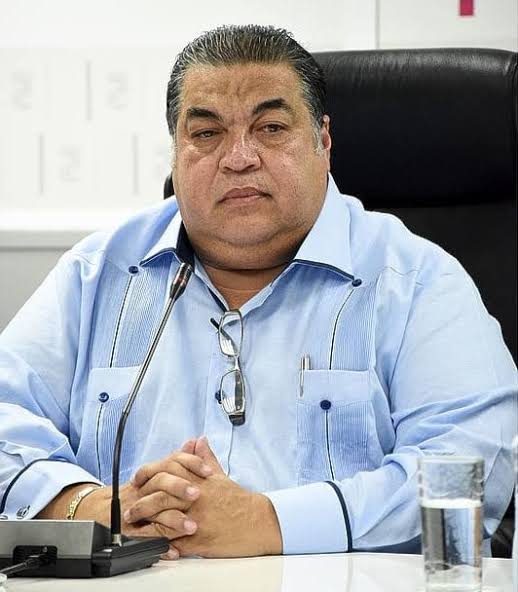
Tax Collector Alfonso Trona
An equally important question concerns the independence of the investigating institution. What safeguards are necessary when an organization conducting an investigation may previously have advised the government on the very policies or decisions now under scrutiny?
These questions have gained renewed significance following Trona's interview in the media.
His statements have brought attention to the relationship between political decision-making, administrative responsibility and the findings of the government auditing foundation SOAB.
The issue goes beyond determining whether individual procedures were followed correctly. It concerns whether the investigation has sufficiently established who made the relevant decisions, who authorized their implementation and who should ultimately be held accountable.
Were Tax Refund Advances Based on Government Policy?
During the interview, according to the available account of his statements, Trona explained that the practice of granting advances on tax refunds originated from ministerial policy that had been applied since 2011.
The arrangement was reportedly intended to assist taxpayers who were entitled to refunds based on calculations by the Tax Inspectorate but had not yet received final assessments because of administrative backlogs.
Under such circumstances, advances could provide taxpayers with money that the tax administration expected they would eventually be entitled to receive.
If Trona's explanation is accurate, the practice raises an important distinction between an administrative procedure introduced through government policy and an individual official independently deciding to authorize payments.
However, his explanation must be examined against SOAB's findings.
According to the investigation, an earlier review found no legal basis, formal regulations, guidelines or established procedures governing such advances.
These two accounts cannot simply be treated as interchangeable.
A ministerial policy may have existed without providing sufficient legal authority for the payments. Conversely, if formal ministerial instructions were issued, those documents could be relevant to understanding why the Tax Collector followed the practice and how responsibility should be distributed.
The essential questions are therefore whether the investigators examined all relevant ministerial decisions, what those decisions actually authorized and whether they were consistent with the applicable legislation.
The existence of a longstanding practice does not automatically make it lawful. But neither should the administrative history of that practice be disregarded when determining individual responsibility.
A Government Decision Does Not Automatically Remove Personal Responsibility
Public officials are responsible for acting within the law, even when implementing policies established by ministers.
A ministerial instruction cannot automatically justify a payment that violates legal requirements.
SOAB reportedly identified shortcomings involving the authorization, registration and settlement of advances on tax refunds.

SOAB building in Willemstad
Those findings deserve serious consideration.
However, a balanced assessment also requires identifying the precise rules that applied when the transactions occurred.
What authority did the Tax Collector possess? Which decisions required ministerial approval? What procedures were established by the government? And where, specifically, did the Tax Collector's actions depart from those requirements?
These distinctions are essential.
Without them, the public may be left with the impression that an individual official was solely responsible for practices that could have developed through years of ministerial decisions and administrative instructions.
That does not establish that Trona acted correctly. It establishes why the complete decision-making structure must be examined before responsibility can be assigned fairly.
The Missing Link: Political Responsibility
One of the most important issues raised by the controversy is the possible involvement of political authorities in decisions affecting tax administration.
Where there are indications of political interference, investigators must establish what instructions were issued, by whom, and under what authority.
They must also determine whether those instructions influenced the actions of the Tax Collector.
If a minister authorized a particular procedure, the investigation should explain the legal and administrative significance of that authorization.
If the Tax Collector acted beyond the scope of an instruction, that distinction should be equally clear.
Political responsibility and administrative responsibility are not necessarily mutually exclusive.
A minister may bear responsibility for establishing or approving a policy, while a public official may remain accountable for implementing it correctly.
The challenge is determining where one responsibility ends and the other begins.
An investigation that concentrates primarily on the conduct of a recognizable public official without adequately explaining the role of the responsible political authorities risks presenting an incomplete account.
This is particularly concerning when the findings become part of a public controversy that could affect an individual's professional reputation.
Questions Surrounding Billions in Tax Debts
Trona's interview also raised questions about decisions concerning the removal of outstanding tax debts from active collection.
According to his account, a proposal involving more than XCG 1.1 billion in tax debts received a positive assessment from a management support team that included SOAB and was subsequently approved by the Council of Ministers.
He further suggested that a different implementation resulted in an amount exceeding XCG 3 billion.
These are substantial figures, but the statements alone do not establish what happened.
The relevant documents, decisions and financial records must be examined before conclusions can be drawn.
One essential question is whether the two amounts concern the same tax debts, periods and selection criteria.
Without that information, comparing XCG 1.1 billion with more than XCG 3 billion could be misleading.
It is also necessary to determine who authorized any changes to the original proposal and whether the Tax Inspectorate, the minister or the Tax Collector had responsibility for the relevant decisions.
Another important distinction concerns the meaning of removing a debt from active collection.
An administrative decision to stop pursuing collection does not necessarily mean that a taxpayer's legal debt has been forgiven.
The precise nature of the decisions must therefore be established before they can be characterized accurately.
Can SOAB Investigate Decisions It Previously Advised On?
Perhaps the most sensitive question concerns SOAB's own position.
If the foundation previously participated in advising on a government proposal that subsequently became part of an investigation, what safeguards were established to protect the objectivity of the later review?
Previous involvement does not automatically disqualify an organization from conducting an investigation.
However, it may create a risk that the institution is reviewing decisions or processes in which it previously played an advisory role.
That risk should be identified, evaluated and addressed.
Relevant safeguards could include assigning investigators who were not involved in the earlier advice, arranging an independent review of the findings or clearly documenting how potential conflicts were managed.
The public should also be informed about the nature of SOAB's earlier involvement.
Was the foundation merely providing technical support? Did it assess the legality of the proposal? Did it advise on the financial consequences? Or did it participate in recommending a particular course of action?
These distinctions matter because the nature of the earlier involvement determines the potential threat to independence and objectivity.
Without clarity about the foundation's previous role and the safeguards applied during the investigation, questions about the perceived independence of the process will remain.
Professional Standards Apply to Internal Audits
The fact that an investigation is classified as an internal audit does not eliminate the professional responsibilities of the accountants involved.
SOAB has stated that it applies the Dutch professional rules for accountants, known as the Verordening gedrags- en beroepsregels accountants (VGBA).
These rules establish fundamental principles including integrity, objectivity, professional competence and due care.
Article 9 addresses the responsibilities of accountants who become associated with information that is materially incorrect, incomplete or misleading.
The significance of these obligations extends beyond traditional external financial audits.
An accountant working on an internal investigation must also consider whether the information presented accurately reflects the findings and whether relevant omissions could create a misleading impression.
This does not mean that every internal audit must examine every possible aspect of a government policy.
Investigations necessarily operate within defined terms of reference.
However, a limited scope should be clearly explained, particularly when omitted circumstances could materially affect how the findings are understood.
When a report is subsequently used in public discussions about an identifiable official, the distinction between established findings, disputed allegations and matters outside the investigation becomes especially important.
SOAB's Findings Must Also Be Represented Fairly
An objective analysis cannot ignore information that may support the investigating institution.
The SOAB report reportedly includes findings that do not substantiate every allegation examined.
In one case involving a company, the foundation concluded that no tax debt forgiveness had taken place, that a payment arrangement was being complied with and that deliberate unauthorized interference could not be established.
These findings are important because they demonstrate that the investigation did not exclusively record information unfavorable to the Tax Collector.
Any suggestion that SOAB deliberately included only incriminating material would therefore be inconsistent with those reported findings.
At the same time, the inclusion of findings favorable to the official does not automatically resolve questions about the completeness of the investigation.
Both considerations must be acknowledged.
The issue is not whether SOAB should be defended or criticized as an institution, but whether the investigation adequately addressed all circumstances necessary to support its conclusions.
Was Trona Given a Meaningful Opportunity to Respond?
Another important issue concerns the principle of hearing both sides.
SOAB has described several opportunities provided to Trona to respond to the investigation's findings.
His attorney, however, has argued that the suspension of the Tax Collector and his lack of access to relevant files and computer systems prevented him from preparing a substantive defense.
This disagreement requires more than simply establishing whether a response deadline was offered.
The central question is whether Trona had a meaningful opportunity to examine the evidence, verify transactions and provide documents supporting his explanations.
An official who no longer has access to administrative records may face practical difficulties responding to allegations concerning decisions made over several years.
That does not mean an investigation must be suspended indefinitely or that every request for additional access must be granted.
It does mean that investigators should consider whether restrictions on access materially affected the person's ability to respond.
If relevant records were unavailable to Trona, the investigation should explain how that limitation was addressed and whether it affected the assessment of disputed facts.
Procedural fairness involves more than offering an opportunity to submit comments. It also requires considering whether the person concerned had a reasonable ability to substantiate those comments.
What Was the Investigation Intended to Establish?
According to SOAB, the investigation was intended to assess allegations against concrete facts and examine weaknesses in internal controls.
There is no evidence in the available material establishing that the investigation was conducted for an improper purpose.
It would therefore be unjustified to conclude that SOAB deliberately sought to damage Trona's reputation or protect political officials.
Nevertheless, the stated purpose of the investigation creates an expectation that evidence capable of confirming or disproving allegations would receive serious consideration.
If ministerial decisions, government instructions or earlier SOAB advice were relevant to the conduct under investigation, the report should make clear whether those materials were examined.
If they were not examined because they fell outside the assignment, that limitation should be identified.
Such transparency would help readers distinguish between findings about individual transactions and broader conclusions about political or administrative responsibility.
Why This Matters Beyond One Tax Collector
The controversy surrounding Trona is not simply a dispute between an official, his attorney and an auditing institution.
It raises broader questions about the way Curaçao investigates government decisions and assigns responsibility when administrative problems emerge.
Government policies are rarely implemented by one individual acting in isolation.
They involve ministers, departments, advisers, inspectors, financial administrators and officials responsible for execution.
When a policy becomes controversial, an investigation must be capable of distinguishing between the decision to establish a practice, the authority to approve it and the responsibility to implement it correctly.
Failing to make those distinctions can undermine public confidence in the investigative process.
It can also create uncertainty among public officials about whether they will be held personally responsible for decisions made within a wider governmental framework.
At the same time, ministerial approval must never become an automatic defense for unlawful conduct.
Both principles are necessary for effective accountability.
The Questions That Still Require Answers
Several issues remain unresolved.
The public needs to know which ministerial instructions and decisions were examined in relation to tax refund advances, what legal authority those documents provided and whether the Tax Collector acted within their limits.
The reported decisions concerning outstanding tax debts also require documentary clarification, particularly the relationship between the amounts of XCG 1.1 billion and more than XCG 3 billion.
SOAB's previous advisory involvement, if confirmed, should be explained alongside the measures taken to protect the objectivity of its subsequent investigation.
The effectiveness of the opportunity given to Trona to respond must also be assessed in light of his reported lack of access to administrative records.
None of these questions establishes that Trona is innocent of wrongdoing, that SOAB's conclusions are incorrect or that political authorities acted improperly.
They do, however, demonstrate why a complete and transparent account is essential before definitive judgments are made.
The fundamental issue is whether the investigation provides sufficient context to distinguish personal responsibility from decisions originating at the political and institutional levels.
An investigation can identify genuine administrative failures while still leaving important questions about their origins unanswered.
For Curaçao, the credibility of public accountability depends on examining both.
The objective should not be to protect an official, a minister or an investigating institution from legitimate scrutiny. It should be to establish the facts, identify the applicable rules and determine responsibility on the basis of evidence.
Until the relevant ministerial decisions, administrative instructions, advisory roles and disputed records have been adequately clarified, public judgments about individual responsibility should remain measured.
Ultimately, the credibility of the process will depend not only on what SOAB established, but also on whether the public can understand what was examined, what remains disputed and what was left outside the investigation.
That is the standard of transparency a democratic system of government should demand.