November 13, 2026 | Constitutional, Legal, Financial, and Political Assessment
1. Summary and Main Conclusion
The letter constitutes a serious constitutional and administrative warning to the Pisas government regarding its decision to award year-end bonuses.
The photographs show that the letter, dated November 4, 2026, was sent by the Governor of Curaçao to Prime Minister Gilmar Pisas. It concerns the Council of Ministers’ decision of October 7, 2026, to grant a one-time year-end payment of 8%.
The most important distinction is the following:
A request by the Governor to reconsider a decision is not necessarily legally equivalent to a formal refusal to sign a national decree. Nevertheless, such a request represents a significant intervention in the government’s decision-making process.
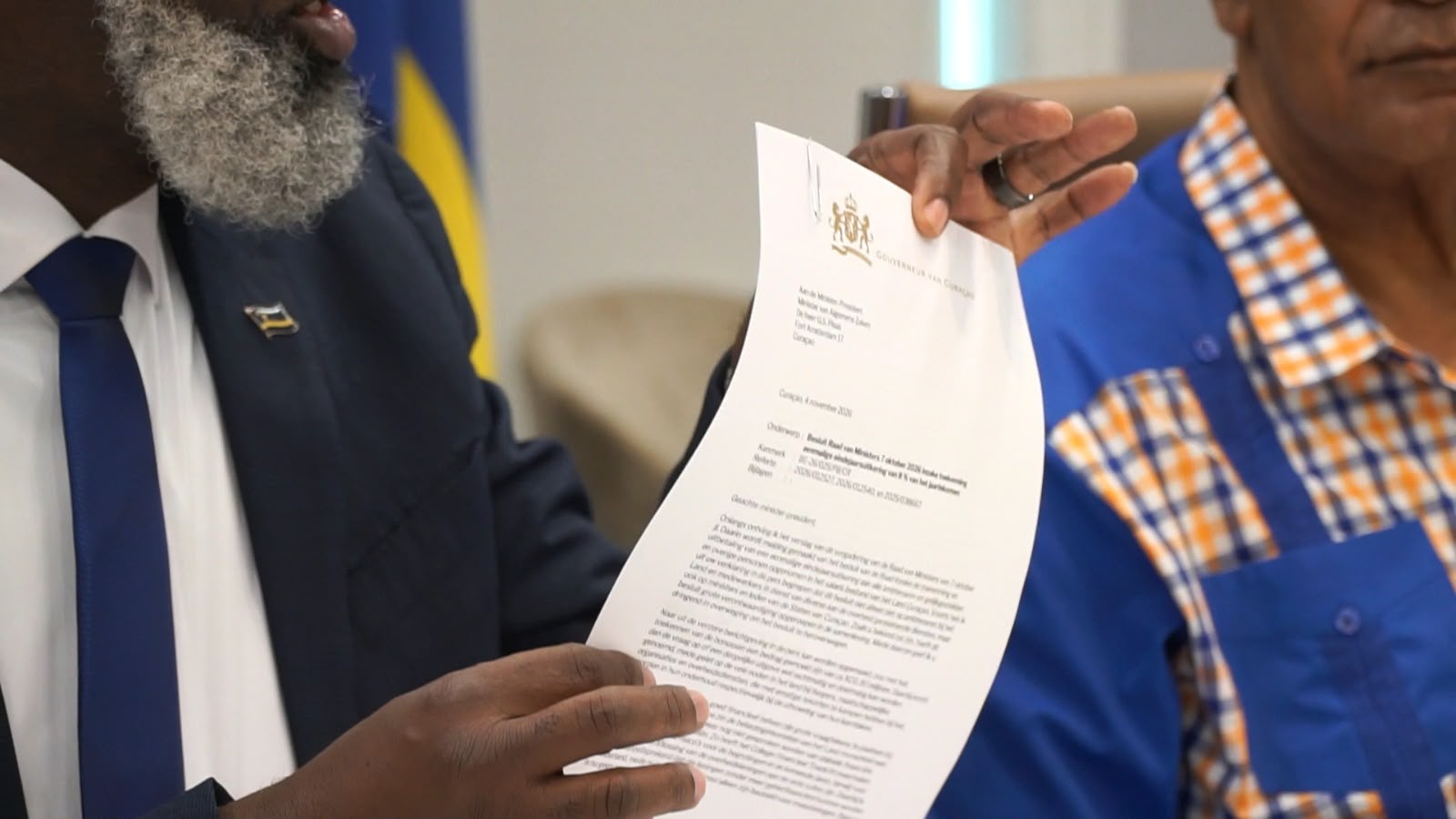
Three conclusions follow from this:
- The government’s decision concerning the bonuses raised questions about legality, financial justification, and the care exercised in administrative decision-making.
- The proposed payments to ministers and Members of Parliament deserve particular attention because their remuneration and other financial entitlements are regulated by specific national ordinances.
- Withdrawing the bonuses for political officeholders does not automatically mean that all legal and financial questions concerning payments to civil servants and other public-sector employees have been resolved.
My central assessment is that the government’s decision to reverse course does not constitute evidence of criminal conduct. However, it is a strong indication that the original decision had not been sufficiently developed from a legal and administrative perspective.
Important limitation: The photographs are not sufficiently clear to allow every sentence of the letter to be read reliably. Therefore, this analysis has been supplemented with relevant legislation and news reporting from the same period. A distinction is made between established facts and legal or political interpretations.
2. What Does the Letter Mean Legally?
A. The Governor Did Not Unconditionally Approve the Decision
The letter addresses the Council of Ministers’ decision and identifies concerns that warrant reconsideration.
This is different from ordinary administrative correspondence. The Governor has constitutional responsibilities in the adoption of national decrees and national ordinances.
However, the available photographs do not establish that the Governor formally invoked Article 21 of the Regulations for the Governor of Curaçao.
This article establishes a specific procedure for refusing to approve certain decisions on the grounds that they conflict with Kingdom law.
Source: Overheid.nl – Official Publications.
This distinction is important because Prime Minister Pisas subsequently stated that the Governor had requested reconsideration and had not formally rejected the bonuses.
Source: Antilliaans Dagblad.
Assessment: The conclusion that the Governor warned the government and requested reconsideration is better supported than the claim that he formally blocked the decision.
B. Bonuses for Political Officeholders Face a Clear Legal Obstacle
The relevant constitutional provisions are clear.
|
Legal provision |
Legal significance |
|
Article 37 of the Constitution of Curaçao |
The remuneration and other financial benefits of ministers must be regulated by national ordinance. |
|
Article 52 of the Constitution of Curaçao |
Financial benefits for Members of Parliament must be regulated by national ordinance. Amendments require a two-thirds majority of the sitting members. |
|
Official Gazette 2021, No. 77 |
Regulates the financial benefits of ministers. |
|
Official Gazette 2021, No. 78 |
Regulates the financial benefits of Members of Parliament. |
The national ordinances from 2021 that were examined do not expressly provide for the proposed additional year-end bonus.
The government would therefore have to demonstrate that a valid legal basis exists for these payments, taking into account any subsequent legislative amendments.
Source: Constitution of Curaçao, July 13, 2010, and related legislation.
A decision by the Council of Ministers or a budget allocation cannot, by itself, create a personal financial entitlement where the applicable legislation does not provide the necessary legal authority.
This assessment is also consistent with concerns publicly expressed by the Board of Financial Supervision for Curaçao and Sint Maarten (Cft).
3. The Issue From the Perspective of Financial Management and Good Governance
NAf 47.7 million
Announced on October 7–8, 2026, covering several categories of beneficiaries.
PROPOSED BONUSES FOR POLITICAL OFFICEHOLDERS
NAf 427,000
Reported gross amount for ministers and Members of Parliament combined.
These figures relate to different components of the arrangement and must not be treated as equivalent.
Source: Altijd het laatste nieuws and related reporting.
When assessing government expenditure, two separate questions must be answered:
- Is the expenditure permitted under the applicable legislation?
- Has the expenditure been properly authorized and funded under the applicable budgetary rules?
The October 7 announcement concerned payments to various groups, including civil servants, education personnel, subsidized institutions, and recipients of social benefits.
A subsequent debate emerged over additional payments to political officeholders.
There is also an important issue concerning transparency.
The bonus decision does not appear in the publicly published overview of decisions taken by the Council of Ministers on October 7, 2026.
This does not automatically mean that there was deliberate concealment. However, considering the substantial amounts involved, an explanation is justified.
Source: gobiernu.cw.
4. What Does This Mean for Civil Servants?
This is one of the most important aspects of the debate.
The absence of a legal basis for bonuses to ministers and Members of Parliament does not automatically mean that a bonus for civil servants is also unlawful.
The two categories are governed by different legal frameworks.
However, the reverse is equally important: the existence of a valid legal basis for payments to public-sector employees must not be assumed without examination.
For each category, the government must clearly explain which legal provisions authorize the payment, how the expenditure has been budgeted, and which implementing decisions are required.
Luigi Faneyte, with thanks to the advanced capabilities of Artificial Intelligence (AI).