Governments cannot function without taxes. Revenue collected from individuals and businesses finances public education, healthcare, infrastructure, law enforcement and the institutions that keep a country operating. For Curaçao, where government finances remain under pressure and improving tax compliance is a continuing priority, effective tax collection is essential.
But there is a fundamental question that deserves greater attention: Should the success of Curaçao's tax administration be measured primarily by how much money it collects, or should equal importance be given to how fairly, accurately and transparently that money is collected?
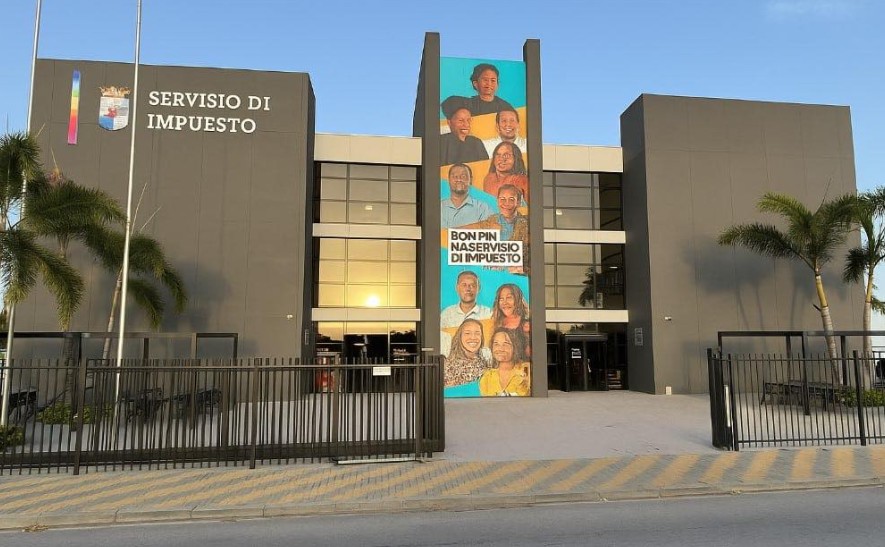
Curaçao Tax Department
This question has gained renewed relevance following an analysis published by the World Bank on October 15, 2026, titled "Raising Revenue Right: Better Taxes for Development."
The World Bank's central message offers an important perspective for Curaçao. Governments do not necessarily have to rely exclusively on higher tax rates or tougher collection measures to increase revenue. Better technology, stronger institutions, greater transparency and public trust can also contribute to a more effective tax system.
For Curaçao, this raises a broader policy question: Is the government investing as much effort in earning taxpayers' confidence as it is in collecting their money?
The Difference Between Collecting More and Collecting Correctly
In Curaçao, discussions about tax administration frequently focus on the tax gap, the difference between taxes legally owed and the amounts actually collected.
Reducing this gap is a legitimate government objective. Unpaid taxes deprive the public treasury of resources that could otherwise finance essential services.
However, an exclusive focus on increasing collections can create problems if the administration does not adequately distinguish between different reasons why taxes remain unpaid.
Not every outstanding tax assessment represents deliberate tax evasion.
Some taxpayers may be unable to pay because of financial difficulties. Others may be disputing assessments they believe are incorrect. In certain cases, administrative errors or disagreements about the interpretation of tax legislation may explain why an amount remains outstanding.
These situations require different responses.
A taxpayer deliberately concealing income should not be treated in the same manner as someone who has filed a legitimate objection against an assessment. Likewise, a struggling small business that acknowledges its tax obligations but temporarily lacks the financial capacity to pay presents a different challenge from an enterprise systematically avoiding taxation.
A modern tax administration should have the tools and procedures to recognize these distinctions.
The objective should not simply be to collect as much money as possible, but to ensure that the correct amount is collected from the correct taxpayer through a lawful and proportionate process.
An Assessment Is Not Automatically Correct
One of the most important principles of responsible tax administration is that an officially issued tax assessment is not necessarily free from error.
Tax authorities can make mistakes in calculations, apply incorrect information or reach conclusions that taxpayers have legitimate grounds to challenge.
That is precisely why legal systems provide procedures for objections and appeals.
Curaçao's taxpayers have statutory avenues to contest assessments and challenge certain collection measures. These procedures are not privileges granted at the discretion of tax officials. They are part of the legal protection that citizens and businesses are entitled to expect from the government.
However, the existence of legal safeguards does not automatically guarantee that they function effectively in practice.
The more important questions concern how objections are handled, how quickly decisions are made and whether collection activities comply with applicable rules while disputes are being considered.
Filing an objection does not necessarily suspend collection automatically. The legal consequences depend on the applicable procedures, including whether a postponement of payment has been granted.
Nevertheless, when taxpayers have complied with the relevant procedures and obtained the protection provided under those rules, they should be able to rely on the tax administration to respect them.
If citizens must repeatedly hire advisers, submit additional correspondence or initiate legal proceedings merely to secure compliance with existing rules, the costs extend beyond the disputed tax amount.
Such experiences can undermine confidence in the fairness and reliability of the entire system.
The Hidden Cost of Administrative Mistakes
The financial impact of an incorrect tax assessment is not limited to the amount initially demanded.
For individuals and businesses, resolving disputes can require time, professional assistance and additional expenses.
A business facing an unjustified collection measure may experience cash-flow difficulties. An individual may have to divert resources from household expenses to address an administrative problem.
Even when a taxpayer ultimately succeeds in challenging an assessment, the process may already have caused financial or personal consequences.
This raises an important question for Curaçao's tax authorities: How much attention is given to measuring the costs that administrative mistakes impose on taxpayers?
The government regularly evaluates revenue collection and outstanding tax debts. But an equally important assessment of administrative performance would examine how often tax decisions must be corrected.
For example, policymakers could benefit from knowing how many assessments are reduced or canceled following objections, how long taxpayers wait for decisions and how frequently collection measures are subsequently found to have been unjustified.
These figures would not necessarily indicate misconduct. Tax disputes are a normal feature of any functioning tax system.
However, systematically collecting and publishing such information could help identify recurring administrative weaknesses and areas requiring improvement.
It would also demonstrate that the government considers accuracy and legal protection essential measures of institutional performance.
The World Bank's Message: Trust Has Economic Value
The World Bank's analysis offers a useful framework for understanding why trust matters in taxation.
A government that improves the quality of its tax administration can potentially increase compliance without relying solely on more aggressive enforcement.
Digital systems can reduce administrative errors, improve recordkeeping and make procedures more accessible.
Clear rules can help taxpayers understand their obligations.
Transparent decision-making can reduce uncertainty.
And predictable, fair treatment can strengthen confidence that the system operates according to the law.
These improvements are not merely administrative conveniences. They can influence whether taxpayers view compliance as a legitimate civic obligation or as an adversarial encounter with the state.
When citizens believe the government applies the law consistently and corrects mistakes fairly, they have stronger reasons to cooperate voluntarily.
That does not eliminate the need for audits, penalties or enforcement against deliberate tax evasion.
Effective enforcement remains indispensable.
But enforcement and public trust should reinforce each other rather than be treated as competing priorities.
Government Accountability Must Work Both Ways
There is another dimension of tax confidence that deserves attention in Curaçao: the relationship between collecting public money and explaining how it is spent.
Taxpayers are legally required to meet their obligations regardless of whether they agree with every government expenditure.
Nevertheless, public confidence can be influenced by whether citizens believe their contributions are being managed responsibly.
When residents pay taxes, they reasonably expect those resources to support functioning schools, accessible healthcare, safe roads, effective law enforcement and reliable public institutions.
They also expect the government to account for how public funds are used.
This is particularly relevant in Curaçao, where weaknesses in public financial management and internal controls have been recurring concerns.
Government accountability should therefore not end when revenue enters the treasury.
It must continue through budgeting, procurement, expenditure controls, financial reporting and independent auditing.
If the government demands strict compliance from taxpayers, it must also demonstrate discipline and transparency in managing the money collected.
A tax system ultimately depends on a relationship of mutual responsibility.
Citizens must comply with the law, while the government must administer that law fairly and account for its own decisions.
Measuring the Quality of Tax Collection
Curaçao could benefit from broadening the indicators used to evaluate the performance of its tax administration.
Revenue growth, collection targets and reductions in outstanding tax debt are important measures, but they do not tell the entire story.
A more comprehensive assessment could also examine the accuracy of assessments, the handling of objections, the timeliness of administrative decisions and the proportionality of enforcement.
For example, the government could publish regular information on the percentage of assessments successfully challenged, the average time required to resolve objections and the number of collection actions corrected after review.
It could also examine how taxpayers experience communication with the administration and whether they receive clear explanations of their rights and obligations.
Such information would provide a more balanced picture of performance.
A tax administration that collects more revenue while generating increasing numbers of legitimate complaints may require different improvements from one that increases revenue while reducing errors and improving service.
Without measuring both dimensions, policymakers risk overlooking weaknesses that affect public confidence.
Technology Alone Will Not Solve the Problem
Modernizing tax administration through digital systems can deliver significant benefits.
Automated processes can improve efficiency, reduce paperwork and support better identification of unpaid obligations.
However, technology is only as reliable as the information and procedures on which it operates.
An incorrect assessment does not become legally sound simply because it was generated by a computerized system.
Likewise, automated collection procedures can amplify administrative mistakes if adequate safeguards are not built into the process.
For Curaçao, digital modernization should therefore be accompanied by stronger quality controls, accessible objection procedures and mechanisms to correct errors promptly.
The goal should be a system that is not only faster at identifying unpaid taxes but also more accurate in determining what is actually owed.
From Tax Pressure to Tax Confidence
The broader lesson for Curaçao is that increasing government revenue and strengthening taxpayer rights should not be regarded as contradictory objectives.
A credible tax administration must be capable of pursuing those who deliberately evade their obligations.
At the same time, it must recognize legitimate disputes, respond appropriately to financial hardship and ensure that collection measures remain lawful and proportionate.
The government should not have to choose between effective enforcement and fair treatment.
Both are necessary for a sustainable tax system.
The World Bank's analysis provides an opportunity to reconsider what successful tax administration should mean in Curaçao.
It is not enough to ask how much additional revenue has been collected or how much the tax gap has narrowed.
The government should also ask whether taxpayers increasingly trust the administration to make accurate decisions, respect their legal rights and correct mistakes without unnecessary obstacles.
Ultimately, the strength of Curaçao's tax system will depend not only on its capacity to collect money but also on its ability to demonstrate that the money collected is genuinely owed and obtained through a fair process.
That may be one of the most important investments the government can make in improving voluntary tax compliance.
Because a tax administration that earns public trust may achieve something that tougher collection measures alone cannot: a stronger and more durable willingness among citizens and businesses to fulfill their obligations.
The challenge for Curaçao is therefore not simply to collect more taxes. It is to collect them correctly, transparently and in a manner that strengthens rather than weakens confidence in government.