From rising fuel prices and healthcare pressures to tax controversies and tourism growth, last week exposed a troubling gap between government ambitions and everyday reality.
Curaçao continues to present itself as an island moving forward. Tourism is expanding, government revenues are improving, major development projects are being discussed, and ministers are announcing plans to modernize public services. Yet behind these positive developments lies a more complicated reality.
For many residents, economic progress is not necessarily translating into greater financial security, better public services, or improved living conditions.
The developments of the past week illustrate a recurring problem in Curaçao's governance: ambitious plans are announced, investigations are conducted, and financial decisions are made, but the consequences are often felt most directly by ordinary citizens who have little influence over those decisions.
From higher fuel prices and growing pressure on healthcare to questions surrounding tax collection, the former SEHOS hospital complex, school transportation, and environmental safety, one question connects these seemingly unrelated issues.
Who ultimately pays when government policies, administrative systems, and public services fail to function as intended?
Tax Collection: Accountability Must Extend Beyond Individual Officials

Tax Office in Willemstad
The investigations conducted by government auditing foundation SOAB into the Tax Collector's Office have raised serious questions about transparency, administrative controls, and political responsibility.
One investigation concerns the tax affairs of former minister George Jamaloodin, involving assessments and additional charges totaling more than XCG 1 million.
According to the administrative records examined, approximately XCG 923,480 was reduced, while the amount ultimately paid was approximately XCG 56,725.
SOAB was unable to establish which formal decisions and legal grounds justified the reductions.
Another investigation concerns suspended Tax Collector Alfonso Trona, who received XCG 11,464 in advances on tax refunds in 2018.
According to SOAB, the required authorization and an outstanding refund entitlement were absent. Trona repaid the amount in 2024.
Through his attorney, Trona has disputed aspects of the investigation and maintained that he acted in accordance with applicable procedures. SOAB has stated that opportunities were provided for him to respond.
A criminal investigation is also ongoing. The findings of the accountants do not constitute a criminal conviction.
The larger concern, however, extends beyond the conduct of individual officials.
When decisions involving substantial amounts of public revenue cannot be supported by clear documentation, the government faces a fundamental accountability problem.
Taxpayers must be able to trust that everyone is treated according to the same rules, regardless of political connections, professional status, or personal circumstances.
The investigation must therefore establish not only what happened but also which officials and political authorities were responsible for the relevant decisions.
Without that clarity, the public risks being left with allegations rather than answers.
Rising Fuel Prices: Small Increases Can Have Large Consequences
Beginning November 3, motorists will face higher fuel prices.
Gasoline will increase from approximately XCG 2.73 to XCG 2.80 per liter, while diesel will rise from XCG 2.82 to XCG 2.96.
At the same time, electricity and water tariffs have decreased slightly.

The electricity rate for the first 250 kilowatt-hours will fall from almost 70 cents to slightly more than 68 cents per kilowatt-hour, while the lowest water consumption category will decrease from XCG 9.11 to XCG 8.80 per cubic meter.
At first glance, the adjustments may appear relatively modest.
However, the impact of fuel prices extends beyond what motorists pay at service stations.
Diesel is essential for transportation companies, construction activities, deliveries, and numerous other business operations.
When operating costs increase, businesses may eventually pass those additional expenses on to consumers.
This means that even residents who do not own vehicles may experience the consequences through higher prices for goods and services.
According to the Regulatory Authority of Curaçao (RAC), part of the diesel increase reflects costs that were not fully incorporated into the previous month's tariff.
The latest figures from the Central Bureau of Statistics also show that consumer prices increased by 0.6 percent in September compared with August, while average inflation over twelve months stood at 1.5 percent.
These figures provide important economic information, but they do not necessarily reflect the financial experience of individual households.
For families already struggling with rent, groceries, electricity, transportation, and other essential expenses, the most important economic indicator is not the national inflation rate.
It is how much money remains after the monthly bills have been paid.
Tourism Growth: More Visitors Do Not Automatically Mean Better Jobs
Tourism remains one of Curaçao's strongest economic engines.
Visitor arrivals continue to support hotels, restaurants, transportation services, and related businesses.
However, the Board of Financial Supervision (Cft) warned on October 28 that the benefits of tourism growth are not necessarily reaching everyone.
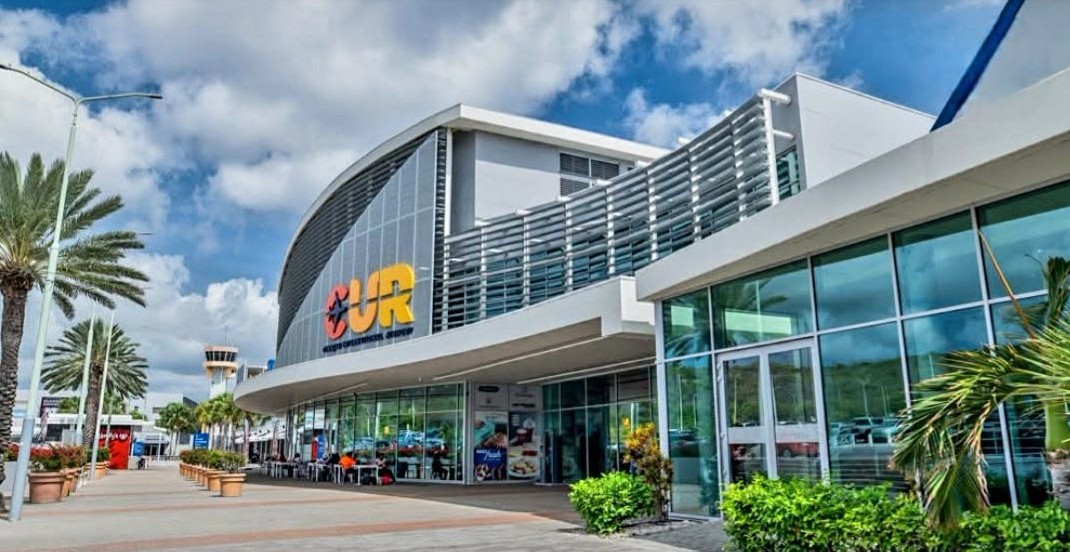
Curaçao Airport
Referring to International Monetary Fund findings, the Cft highlighted concerns about an increase in relatively low-paid and informal employment while formal employment declines.
This development deserves serious attention.
An economy can grow while workers experience little improvement in wages, employment security, or long-term opportunities.
Informal employment also creates difficulties for government finances because it may generate less revenue through taxes and social security contributions.
Meanwhile, expanding tourism places additional pressure on roads, housing, the airport, natural resources, and public infrastructure.
The government is considering replacing the current 7 percent turnover tax on short-term accommodation with a fixed Tourist Entry Tax.
The proposed tax is intended primarily to finance tourism development, with part of the revenue potentially supporting the General Old Age Pension system, known as AOV.
The draft 2027 budget already anticipates XCG 81.7 million in revenue from this proposed measure.
But the tax has not yet been introduced, and its eventual revenue remains uncertain.
This raises an important question about fiscal planning.
Should long-term pension obligations depend partly on revenue from an industry that is vulnerable to international economic conditions, airline capacity, and changes in travel demand?
Tourism can contribute significantly to Curaçao's development, but sustainable economic growth must be measured by more than visitor numbers.
The quality of jobs, local business participation, housing affordability, environmental protection, and the distribution of economic benefits are equally important.
A growing tourism industry should improve the lives of residents, not merely increase the number of people arriving at the airport.
Healthcare: When Social Problems Become Hospital Problems
The situation at Curaçao Medical Center demonstrates how weaknesses in one public service can create pressure elsewhere.
Some patients remain hospitalized even after their medical treatment has been completed.
The reason is not necessarily a continuing medical condition.
In some cases, patients have no safe home to return to. Others face domestic violence, inadequate housing conditions, or the absence of basic facilities needed for proper recovery.
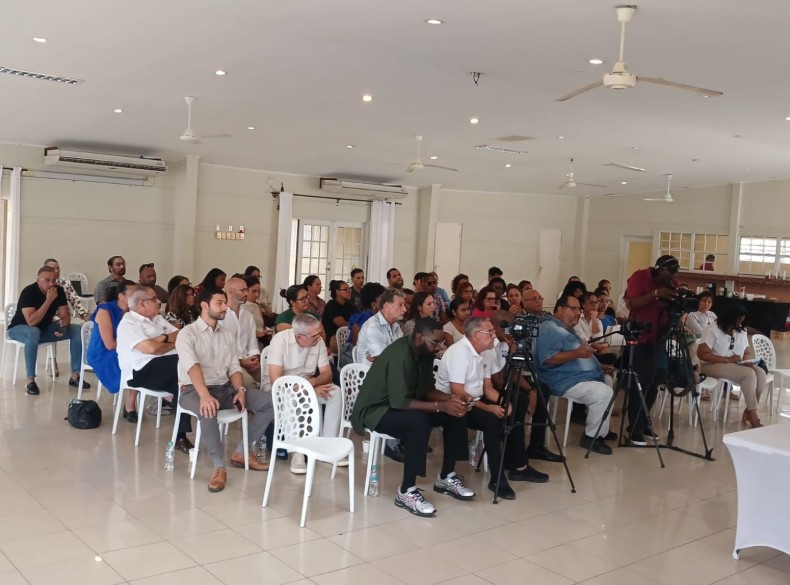
Doctors protesting
Elderly patients may remain in hospital while waiting for placement in residential care facilities.
Every hospital bed occupied by someone who no longer requires hospital treatment is a bed unavailable to another patient.
This creates additional pressure on hospital capacity, healthcare personnel, and public finances.
Building more hospital facilities alone will not solve the problem.
Curaçao also needs adequate elderly care, affordable housing, community support, safe shelters, and effective systems for post-hospital care.
The financial pressures extend beyond the hospital itself.
Health Minister Tyron Boekhoudt recently responded to requests for additional support from healthcare institutions, indicating that their demands would require almost XCG 18 million in one-time payments and more than XCG 6 million in additional annual expenditures.
The minister has emphasized the need for structural financial coverage before making new commitments.
Studies examining healthcare employment conditions and the actual costs of care are expected to be completed in early 2027.
The government's concern about creating permanent financial obligations without sustainable funding is understandable.
But healthcare institutions also face immediate operating pressures.
If financial uncertainty results in staffing shortages, reduced capacity, or the closure of services, the consequences could ultimately become more expensive than timely intervention.
The challenge is finding a balance between financial discipline and the urgent need to maintain essential care.
SEHOS: Public Money Requires Public Accountability
The government's acquisition of part of the former SEHOS hospital complex has generated another debate about the use of public resources.
Finance Minister Charles Cooper confirmed that private buyers initially acquired the former hospital property from the curator for XCG 10 million.
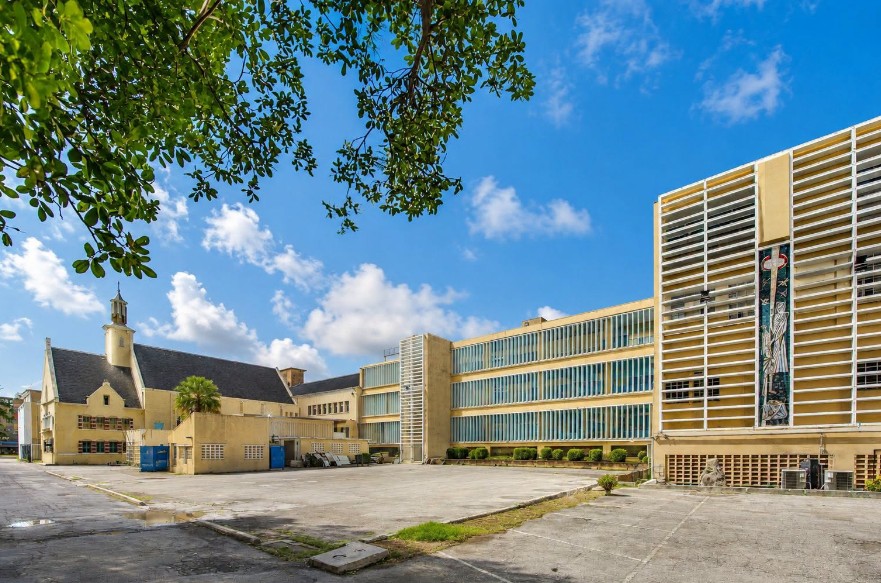
Former hospital SEHOS in Willemstad
They subsequently sold a substantial portion of the complex for XCG 13 million to the government and a party associated with Curaçao Medical Center.
The difference between these amounts should not automatically be characterized as XCG 3 million in profit.
The transactions did not involve precisely the same parcels, and the buyers may have incurred additional costs.
Nevertheless, the public is entitled to a complete explanation of the transactions.
Which properties were acquired? What was their assessed value? What costs were incurred? And what financial obligations remain?
The future of the historic chapel is another important consideration.
The chapel remained in private ownership, but the government has indicated a willingness to undertake restoration work.
Preserving Curaçao's architectural heritage can be a legitimate use of public funds.
However, when taxpayers finance improvements to privately owned property, the government must clearly explain the public benefits and the conditions attached to the expenditure.
Will the community have access to the restored building? Who will be responsible for future maintenance? What protections will prevent public investment from benefiting private interests without adequate compensation?
The redevelopment of the SEHOS area could contribute significantly to the revitalization of Otrobanda.
But public confidence requires a transparent overview of ownership, investment costs, financing arrangements, and implementation schedules.
Development should not be measured only by the announcement of new projects. It should also be judged by whether the financial decisions behind those projects withstand public scrutiny.
Buena Vista: Environmental Safety Cannot End When the Fire Is Extinguished
The renewed fire at the scrapyard on Heintje Kool in Buena Vista has once again exposed the vulnerability of surrounding neighborhoods.
On Tuesday evening, firefighters responded after flames reappeared at the site.
Residents were advised to keep windows and doors closed, while school administrators were given discretion to determine whether classes could continue.
The latest incident followed days of smoke, evacuations, and school closures.
For residents, the immediate concern is understandable: how many times must a neighborhood experience the same emergency before lasting preventive measures are introduced?
The cause of the renewed fire and the precise composition of the smoke have not been conclusively established in the available information.
That uncertainty makes reliable communication even more important.
Residents need to know whether air quality poses a health risk, what precautions are necessary, and what authorities are doing to prevent another incident.
The government's responsibility does not end when firefighters leave the scene.
Environmental monitoring, enforcement of storage requirements, inspection of hazardous materials, and transparent reporting are essential elements of public protection.
A community should not have to wait for another fire before receiving answers.
Education: A Budget Is Meaningless If Children Cannot Reach School
Education presents another example of how administrative and financial problems can directly affect daily life.
On October 29, teachers' union SITEK warned that school transportation services could be disrupted because drivers had reportedly not received payment.
According to the union, drivers were also awaiting a promised contribution toward fuel expenses.
The actual number of disrupted routes has not been independently established.
Nevertheless, the warning highlights the vulnerability of students who depend on transportation to attend school.
For parents, uncertainty about whether a school bus will arrive creates immediate practical difficulties.
The same day, opposition party PNP questioned the government's education budget.
The number of budgeted personnel positions in public education is projected to decline from 869 to 786 in 2027, a reduction of 83 positions.
This does not necessarily mean that 83 teachers have been dismissed.
Nor does it establish how many teachers will actually be available in classrooms next year.
But it does require a clear explanation.
Are the changes administrative? Do they reflect vacant positions, organizational restructuring, or actual reductions in staffing?
And what effect, if any, will they have on classroom sizes and educational quality?
Education policy cannot be evaluated solely through budget tables.
The real test is whether schools have sufficient qualified personnel and whether students can attend classes consistently.
When either condition is uncertain, the consequences extend beyond the current school year.
Justice: Ambitious Plans Must Be Matched by Resources
Justice Minister Shalten Hato has presented an ambitious policy agenda for 2025–2029.
The plans include preparations for a new prison, the introduction of police body cameras, the use of artificial intelligence in crime prevention and investigation, and additional attention to youth prevention and the rehabilitation of detainees.
The agenda also addresses undocumented migrants and the government's registration initiative, Rib'e Lugá, which closed to new registrations on October 31.
These initiatives could contribute to improvements in public safety and justice administration.
However, ambitious plans require more than political commitment.
A new prison involves construction expenses, staffing, maintenance, security systems, and long-term operational funding.
Body cameras require clear procedures for recording, storing, accessing, and protecting sensitive information.
The use of artificial intelligence in law enforcement raises additional questions about privacy, accuracy, oversight, and accountability.
Similarly, the conclusion of the Rib'e Lugá registration period raises questions about what happens next for undocumented individuals and families seeking legal clarity.
Without detailed budgets, implementation schedules, and measurable objectives, it remains difficult to assess whether the announced initiatives are achievable.
The government's next challenge is therefore to demonstrate how these plans will move from policy documents to practical implementation.
Other Developments Reflect the Same Underlying Challenge
Several additional issues from the past week reinforce the broader picture.
At telecommunications company Flow, the planned outsourcing of certain IT activities has raised concerns among employees and union Sitkom about job security and employment conditions.
Businesses are preparing for renewed waste separation requirements at Selikor beginning January 1, 2027, making clear communication and practical implementation essential.
Curaçao Parliament is also expected to discuss proposed legislation on paid paternity leave on November 4. The proposal would provide one working week of paid leave, but questions concerning financing and eligibility remain relevant.
Meanwhile, a warning about potentially dangerous Takata airbags following a fatal traffic accident in Mahaai has highlighted the importance of vehicle safety. A connection between the airbag issue and the accident has not been confirmed.
These developments may appear unrelated, but they share a common theme: decisions made by institutions and policymakers have practical consequences that must be anticipated, explained, and managed.
The Bigger Picture: Curaçao Needs More Than Economic Growth
The central lesson from the past week is that Curaçao's challenges are increasingly interconnected.
A shortage of suitable housing can prevent patients from leaving the hospital.
Higher diesel prices can increase business costs and eventually affect household expenses.
Tourism growth can generate revenue while placing additional pressure on infrastructure and housing.
Weak administrative controls can undermine confidence in tax collection.
Delayed payments can threaten school transportation.
Environmental problems can interrupt education and affect entire neighborhoods.
These are not isolated failures. They demonstrate how weaknesses in one part of government can create additional problems elsewhere.
Curaçao does not necessarily lack plans, policy proposals, or investigations.
What is often missing is a sufficiently clear connection between political decisions, financial resources, implementation, and measurable results.
Government officials frequently emphasize what they intend to accomplish.
Citizens, however, need to know when those promises will be fulfilled, how they will be financed, and who will be held responsible when implementation fails.
That is particularly important at a time when the government is reporting stronger tax revenues while several public services continue to experience financial and operational difficulties.
Higher government revenue creates opportunities, but it also raises expectations.
If the government collects more money, residents are entitled to ask whether that improvement will translate into more reliable services, better infrastructure, stronger healthcare, and greater financial stability.
An increase in public revenue is not automatically an improvement in public welfare.
Conclusion: The Real Measure of Progress Is What Residents Experience
Curaçao has genuine opportunities for economic development.
Tourism remains strong, investment projects are being considered, and the government has opportunities to modernize essential services.
But progress cannot be judged exclusively by economic growth figures, budget surpluses, or the number of projects announced.
It must also be measured by the everyday experiences of residents.
Can families afford their monthly expenses?
Can patients receive appropriate care without unnecessary delays?
Can children depend on school transportation and adequately staffed classrooms?
Can residents trust that tax decisions are made fairly and transparently?
Can communities rely on the government to protect them from environmental hazards?
And can taxpayers clearly see how public money is being spent?
These questions should be at the center of Curaçao's political and economic debate.
The government must continue pursuing development, but it must also ensure that growth produces tangible benefits for the population.
That requires transparency, coordination between ministries, realistic budgeting, effective oversight, and the willingness to take responsibility when policies do not deliver the intended results.
Ultimately, the success of Curaçao's government should not be measured by how many plans it announces or how much additional revenue it collects.
It should be measured by whether the island becomes a place where public services function reliably, opportunities are shared more fairly, and citizens can see meaningful improvements in their daily lives.
Economic growth is important. But growth without effective governance and social progress risks leaving too many people behind.