On October 10, 2010, Curaçao became an autonomous country within the Kingdom of the Netherlands. It was a historic moment that promised greater responsibility, political self-determination, and the opportunity for Curaçao to shape its own future.
Sixteen years later, however, an important question continues to surface: how much freedom does Curaçao actually have to determine its own priorities when major reforms and the financial resources needed to implement them are tied to agreements with the Netherlands?
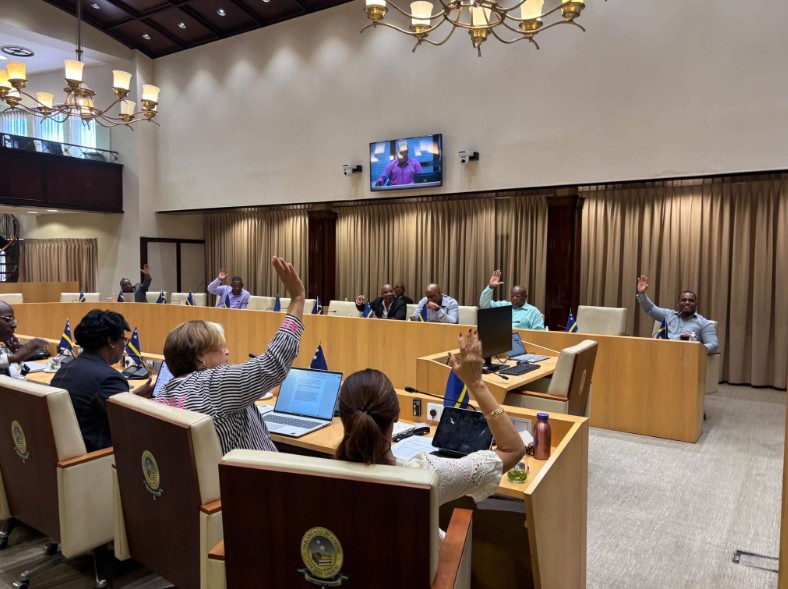
Curaçao Parliament
The latest debate surrounding the Landspakket, the package of reforms agreed upon between Curaçao and the Netherlands, has brought that question back into focus.
The possible extension of the Mutual Arrangement for Cooperation on Reforms until April 2029 is not simply an administrative matter. It raises fundamental questions about political responsibility, democratic oversight, financial dependence, and the practical meaning of autonomy.
At the center of the discussion is a delicate balance. The Netherlands wants to ensure that the funding it provides produces measurable results within an agreed timeframe. Curaçao, meanwhile, has its own priorities, political responsibilities, and obligations toward its population.
Both positions have a legitimate basis. The challenge arises when the priorities of the financial contributor and those of the autonomous country do not fully coincide.
Who Determines Curaçao's Priorities?
The debate in the Curaçao Parliament on October 22 highlighted concerns about the conditions under which reform cooperation with the Netherlands could continue.
The Dutch government's 2027 budget documents state that Aruba, Curaçao, and Sint Maarten remain responsible for implementing their respective reform packages, while the Temporary Work Organization provides technical expertise and financial support.
On paper, this arrangement preserves the responsibility of the Caribbean governments.

Dutch Prime Minister's office in The Hague
In practice, however, financial conditions can influence which reforms receive attention, which projects move forward, and which priorities must wait.
This creates an important distinction between formal autonomy and practical decision-making power.
A government may retain the legal authority to determine its policies while facing financial limitations that make certain choices more difficult to implement.
That does not automatically mean autonomy has been surrendered. Financial agreements are common in international and intergovernmental cooperation. But the extent of the conditions attached to funding, and the freedom governments retain to pursue alternative priorities, are central to evaluating how balanced the arrangement really is.
The relevant question is therefore not only whether Curaçao remains legally responsible for its reforms, but also how much influence it exercises over their selection, timing, financing, and implementation.
The Disagreement Is More Than Theoretical
The latest negotiations provide a concrete example of this tension.
According to Prime Minister Gilmar Pisas, Curaçao submitted 41 reform priorities to the Netherlands in June. However, only four of those projects were fully or partially reflected in the Dutch proposal to extend cooperation.
The Netherlands has offered approximately €8 million, equivalent to around XCG 16 million, for selected reforms during the proposed extension period.
The Dutch government has explained that it wants to concentrate available funding on projects that have a realistic prospect of completion before April 2029 and for which there is sufficient administrative commitment.
From the Dutch perspective, concentrating resources on achievable reforms may improve the likelihood of measurable results.
From Curaçao's perspective, however, the limited selection raises questions about how much weight is being given to the priorities identified by its own government.
The disagreement is therefore not merely about the amount of money available. It concerns who determines which problems deserve attention first.
The current arrangement expires in April 2027. Curaçao has until November 30 to respond to the Dutch proposal, and any extension requires the approval of the Curaçao Parliament.
This means the island's elected representatives have a direct role in deciding whether the proposed cooperation should continue under the terms presented.
Parliament's Role Cannot Be an Afterthought
The Curaçao Parliament has a particularly important responsibility in this process.
Its members are elected to represent the population and to scrutinize decisions made by the government, including agreements that could affect public finances and policymaking for years.
Parliamentary questions are an important part of that responsibility, but meaningful oversight also depends on when elected representatives receive information and whether they have a genuine opportunity to influence decisions before commitments are finalized.
Concerns about this issue are not new.
During earlier discussions surrounding the proposed Caribbean Reform and Development Agency, known as COHO, Curaçao's Council of Advice raised concerns about the potential weakening of parliamentary oversight when reform commitments are negotiated before elected representatives can properly examine them.
Although the proposed COHO framework differed from the current cooperation arrangement, the underlying democratic question remains relevant.
Are members of Parliament involved early enough to influence the substance of reform agreements, or are they primarily asked to assess arrangements after governments have already reached political understandings?
The answer matters because agreements covering multiple years may affect not only the current administration but also future governments and parliamentary majorities.
Effective parliamentary scrutiny requires access to the proposed commitments, financial conditions, implementation schedules, and consequences of accepting or rejecting the arrangements.
Autonomy Also Requires Domestic Responsibility
It would be incomplete to examine Curaçao's autonomy only through its relationship with the Netherlands.
Autonomy also places substantial responsibilities on Curaçao's own government and institutions.
Since 2010, successive administrations have had the authority and responsibility to strengthen public administration, improve financial management, reform essential services, and develop policies responsive to the island's needs.
The implementation report published in February 2026 identified progress in certain areas while acknowledging limited progress on major structural reforms, including changes involving social security, healthcare, education, and taxation.
These findings raise questions about the capacity of Curaçao's institutions to carry out complex reforms, the continuity of policy across different administrations, and the obstacles that have slowed implementation.
Not every delay can be attributed to a lack of political commitment. Major reforms often require legislation, specialized personnel, administrative capacity, funding, and public support.
Nevertheless, the pace of reform is directly relevant to the autonomy debate.
A country that strengthens its own institutions and public finances may gain greater practical freedom to pursue its priorities. Conversely, persistent administrative and financial weaknesses can increase the need for external assistance and the conditions that accompany it.
In that sense, autonomy involves both the right to make decisions and the capacity to carry them out.
Cooperation or Growing Dependence?
Cooperation between Curaçao and the Netherlands does not inherently conflict with autonomy.
Technical assistance, financial support, and shared expertise can help an autonomous country address challenges that might otherwise take longer or cost more to resolve.
The potential benefits are especially relevant in areas such as education, healthcare, public administration, and financial management, where successful reforms can have lasting consequences for residents.
At the same time, cooperation can create tensions when one partner provides much of the funding while the other remains politically accountable for the results.
The critical issue is how those responsibilities are balanced.
If Curaçao establishes its priorities through its own democratic institutions and negotiates external support to implement them, cooperation can reinforce its ability to govern.
If funding arrangements significantly narrow the range of choices available to its government, questions arise about the practical limits of self-government.
Determining which situation applies requires a careful examination of the actual agreements, rather than relying on political declarations from either side.
What Happens If Curaçao Rejects the Extension?
The choice before Curaçao is not without consequences.
If the proposed extension is accepted, the government can continue receiving Dutch technical and financial support for the selected reforms, subject to the agreed conditions.
If Curaçao rejects the offer, the existing arrangement is scheduled to expire in April 2027, and the additional funding reserved for the extension would not become available.
Existing subsidy arrangements for projects already underway may continue under their applicable conditions.
Curaçao would then need to determine how to finance and organize any remaining reforms, whether through its own resources or other forms of cooperation.
Neither option automatically guarantees greater autonomy or better public services.
Continuing cooperation may preserve valuable support while requiring compromises over priorities. Ending it may provide greater flexibility in setting an independent agenda, but it could also place additional financial and administrative demands on Curaçao.
The decision therefore requires an assessment of both the immediate consequences and the longer-term implications for the island's institutions and population.
Sixteen Years After 10-10-10
The discussion ultimately reaches beyond the Landspakket.
When Curaçao obtained its autonomous status in 2010, the constitutional change created a new relationship within the Kingdom. But constitutional autonomy alone could not guarantee strong institutions, effective public administration, or financial independence.
Those objectives require continuous effort by successive governments, Parliament, public institutions, and society.
The current debate illustrates why autonomy cannot be measured solely through constitutional documents or official statements.
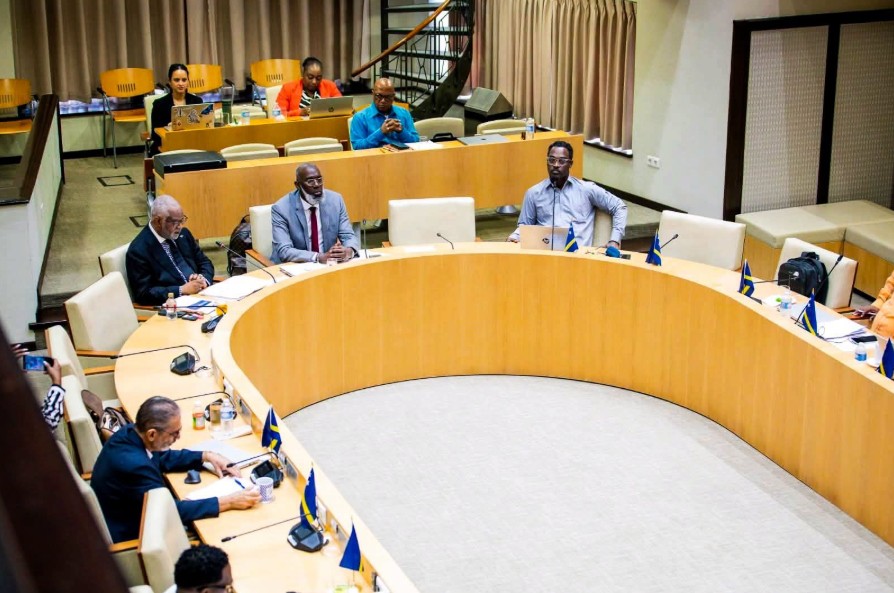
Prime Minister Pisas and his counsilor Monte during the parliamentary debate on the economic reforms
It must also be considered in terms of the decisions a country can make, the resources available to implement them, and the ability of elected representatives to hold decision-makers accountable.
The Dutch government has legitimate reasons to seek effective use of its financial contributions. Curaçao's government has legitimate reasons to insist that reform priorities reflect the needs of its population.
The role of Parliament is to examine those competing considerations and determine whether the proposed arrangements preserve an appropriate balance between cooperation, accountability, and self-government.
Before any new commitments are made through 2029, the public should be able to understand what Curaçao stands to gain, what obligations it would accept, which priorities would receive support, and what alternatives are realistically available.
Sixteen years after Curaçao became an autonomous country, the central question is not simply whether the Netherlands has too much influence or whether Curaçao should accept outside assistance.
It is whether the island's institutions are exercising the authority they possess effectively, transparently, and in the interests of the people they represent.
That is the standard against which the proposed extension, and the decisions of Curaçao's political leaders, should be examined.