Curaçao has been trying for years to reach a seemingly straightforward goal: a government financial administration that is reliable, transparent and sufficiently well organized to receive an unqualified audit opinion on its annual accounts.
The June 2026 Financial Management Report shows that the ambition remains intact. But it also exposes the central contradiction in the reform effort. Curaçao wants to become financially “in control,” yet the government still struggles with shortages of qualified personnel, delayed decision-making, limited implementation capacity and insufficient prioritization at the political and administrative levels.
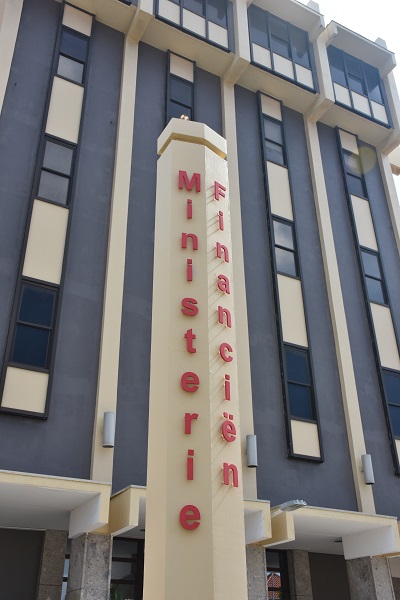
Ministry of Finance
Now another element deserves scrutiny: outside assistance.
Some €1.28 million has been made available through the Temporary Work Organization (TWO) to provide external support for the financial-management program. The money may help Curaçao overcome immediate capacity problems. But it also raises a larger question: will this investment build a stronger Curaçao government, or will the country remain dependent on outside specialists to perform functions that eventually need to be embedded within its own public administration?
This is not a new problem
Curaçao's difficulties with financial management did not begin with the current Landspakket.
The Roadmap toward an unqualified audit opinion has existed in different forms for years. The Council of Advice noted that Curaçao's government revived the effort in 2018 and initially agreed on the objective of obtaining an unqualified opinion for the 2021 annual accounts. That target was not achieved.
The target subsequently moved to the 2026 annual accounts. In June 2023, the Council of Ministers adopted a revised Roadmap specifically aimed at eliminating the deficiencies responsible for errors and uncertainties in Curaçao's financial statements.
That history matters.
When a reform target repeatedly moves forward in time, the issue can no longer be explained simply as a technical accounting problem. It becomes a question of implementation capacity and political management.
The General Audit Chamber has already raised serious doubts about whether the 2026 objective remains achievable. According to figures reported from its assessment, 160 subprojects should have been completed by the end of June 2025, representing 83 percent of the program. Only 23 had actually been completed, or approximately 12 percent.
That is not a minor scheduling delay. It indicates a structural implementation problem.
Eleven problem areas, one enormous task
The Roadmap covers 11 major areas that have historically prevented Curaçao from obtaining an unqualified audit opinion. They include financial functions, personnel expenses, subsidies and transfers, fixed assets, government procurement, tax revenues, non-tax revenues and budget overruns.
These are not isolated bookkeeping exercises. Together, they determine whether the government can demonstrate where public money came from, where it went, whether expenditures were lawful and whether the financial statements provide a reliable picture.
The Council of Advice has previously singled out staffing as a serious threat. In its advice concerning the 2025 budget, it warned that failure to fill financial positions on time could affect the Roadmap and said that without adequate staffing, the various reform projects could not be properly implemented.
The June 2026 reporting therefore describes a problem that has been visible for some time: Curaçao has designed an ambitious financial reform program without yet having all the human capacity required to execute it.
And as projects fall behind, another problem emerges. Activities originally intended to take place sequentially begin running simultaneously. The result is a “harmonica effect”: projects overlap, pressure on the same limited group of officials increases and the original prioritization becomes increasingly difficult to maintain.
The €1.28 million question
This is where the external assistance becomes important.
There is nothing inherently problematic about Curaçao using outside expertise. A government does not need to possess every specialized skill permanently. Accountants, project managers, IT specialists and experts in internal control can be brought in temporarily to solve specific problems.
Indeed, Dutch government documents confirm that technical assistance has been part of the Landspakket model for years. In 2024, support for Curaçao's financial management included technical assistance from the Dutch government's Audit Service as well as temporary external support for projects.
For 2026, the Netherlands has budgeted €19.1 million under TWO subsidies across Curaçao, Aruba and Sint Maarten. TWO supports the countries in developing and implementing Landspakket measures, including through technical assistance, while projects are worked out through plans developed with the countries.
But that does not answer the specific Curaçao question.
Who will receive the €1.28 million allocated to support this financial-management program? How will the experts be selected? How much will go to Curaçao-based professionals? Which expertise genuinely cannot be found locally? What deliverables will the government receive in exchange?
Those details matter because technical assistance should solve a temporary capacity problem rather than institutionalize one.
Where are Curaçao's own professionals?
Curaçao has accountants, auditors, economists, financial managers, tax specialists, lawyers, IT professionals and project managers in both the public and private sectors.
That does not mean every specialist required for the Roadmap is necessarily available locally. Some highly technical assignments may legitimately require expertise from abroad.
But if external experts are selected, the government should be able to explain why.
The issue is not about excluding Dutch or other foreign expertise. It is about ensuring that public-sector reform develops Curaçao's own institutional capacity.
Every externally supported project should therefore have a knowledge-transfer component. If an outside specialist reorganizes an accounting process, someone within the Curaçao administration should be trained to manage that process afterward. If consultants design an internal-control system, local officials should know how to maintain it. If new software is introduced, the government should not become permanently dependent on outsiders to operate it.
Otherwise Curaçao risks buying solutions without buying independence.
Who actually controls the reform?
There is also a constitutional and political dimension.
Official Dutch documents emphasize that Aruba, Curaçao and Sint Maarten are responsible for implementing their respective Landspakketten, while TWO supports implementation together with the countries' coordinating organizations. The Netherlands also says implementation schedules take account of the countries' available capacity.
That is important because financial support and technical assistance should not be confused with ownership of policy.
Curaçao needs accountability. If money is provided for reforms, measurable results should follow. But accountability does not mean Curaçao should surrender its ability to decide how its own public administration is organized.
The real test is therefore not simply whether TWO finances a consultant or whether that consultant comes from Curaçao or the Netherlands. The test is who defines the problem, who determines the solution, who selects the expertise, who evaluates the result and who possesses the knowledge afterward.
If those decisions remain substantially in Curaçao's hands, external assistance can strengthen autonomy. If expertise, decision-making and institutional knowledge continuously remain outside the country, assistance can have the opposite effect.
Political commitment remains the missing ingredient
Money and consultants cannot compensate indefinitely for delayed decisions.
This is perhaps the most important message emerging from the various assessments of Curaçao's financial management.
The Cft warned as early as 2024 that the 2026 objective was at risk. Its prescription was revealing: proper prioritization, efficient deployment of people and resources, and continuous political commitment from the entire Council of Ministers.
That suggests Curaçao's financial-management problem cannot be solved by the Ministry of Finance alone.
Individual ministries are responsible for implementing important parts of the Roadmap. If ministers do not prioritize those projects, if decisions remain on desks too long or if departments do not make staff available, a central program office can monitor the delay but cannot necessarily eliminate it.
This distinction between responsibility and authority is critical.
A monitoring unit can produce dashboards showing that a project is red. It cannot automatically force a ministry to turn it green.
What should happen now?
The government's promise to provide more detailed project-level information in subsequent reporting is welcome, but Curaçao needs something more concrete.
For the €1.28 million in external assistance, the government should disclose the assignments being financed, the selection mechanism, the expected results, deadlines and the responsible ministry or official. It should also make clear how much expertise is being sourced locally and externally and what arrangements exist for transferring knowledge to civil servants.
The same transparency should apply to the Roadmap itself.
Instead of the public hearing repeatedly that financial management is “being improved,” Curaçao should be able to see which of the 11 problem areas have actually been resolved, which remain outstanding, what is causing each delay and whether the 2026 audit target remains realistic.
There is already an official recognition of what the end state should look like. TWO's April 2026 summary of the revised financial-management approach says the objective is to sustainably establish the foundations of sound financial management so that the government is “in control” of public finances and can properly account for them to the people's representatives.
The emphasis should be on one word: sustainably.
An unqualified audit opinion would be an important achievement, but it is not the ultimate objective. Curaçao could theoretically repair files, hire specialists and complete projects sufficiently to obtain a favorable auditor's opinion, only to discover several years later that the underlying capacity remains fragile.
The true measure of success is whether the government can continue doing the work after the consultants leave.
Curaçao therefore faces two tests at once. The first is financial: can it finally produce annual accounts that satisfy the auditor? The second is institutional: can it build a government capable of maintaining that standard largely through its own people, systems and leadership?
Passing the first without passing the second would amount to completing the Roadmap without solving the problem.