Curaçao is entering the final months of 2026 with a familiar contradiction. While the government announces investments, long-term strategies, and new initiatives, many residents continue to struggle with problems that directly affect their daily lives. Access to healthcare, reliable electricity, public safety, affordable living, and economic opportunities remain among the most pressing concerns.
The developments of the past week illustrate a challenge that goes beyond any single ministry or government institution. Curaçao is not necessarily suffering from a shortage of plans or ambitions. The more important question is whether those plans can be translated into measurable improvements that citizens can actually experience.
The temporary closure of general practitioners' offices and pharmacies, renewed warnings about electricity shortages, and the announcement that military personnel will support police patrols all point to pressure on essential public services.
At the same time, the island is discussing an energy strategy extending to 2050, investing in renewable energy infrastructure, exploring food security initiatives, and preparing for technological changes involving artificial intelligence.
These are important developments, but they also expose the distance between Curaçao's immediate needs and its long-term ambitions.
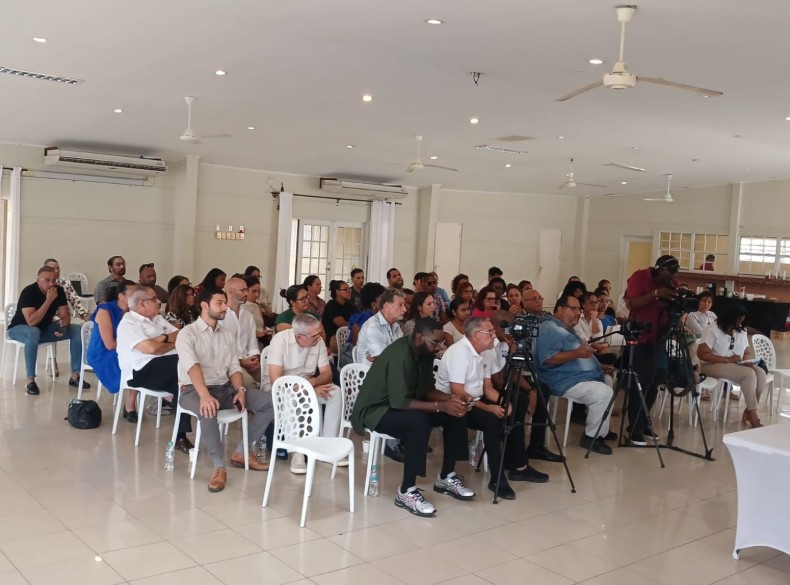
Healthcare workers on strike
Healthcare: A System That Cannot Depend on Emergency Solutions
The healthcare dispute involving general practitioners, pharmacies, and the government demonstrated how quickly disagreements over financing can affect patients.
General practitioners suspended regular services on Monday, leaving five designated locations available for urgent medical assistance. By Wednesday, most pharmacies had also closed, with only two remaining available for emergency medication.
The conflict centered on compensation. General practitioners are seeking an additional XCG 30 annually per registered patient, while pharmacists want higher payments for processing prescriptions. Both groups argue that increasing personnel, accommodation, and operational expenses have placed pressure on their ability to provide services.
The government has maintained that further examination is necessary before agreeing to higher compensation.
The Public Health Inspectorate intervened, imposing measures on 25 pharmacies and warning of possible penalties of XCG 10,000 per day for continued closure. Pharmacies reopened on Thursday, while general practitioners resumed their activities on Friday following judicial mediation.
Although services have resumed, the underlying financial dispute remains unresolved. Court proceedings could continue on November 16.
The Curaçao Medical Center also warned that it cannot indefinitely absorb the additional pressure created when other healthcare providers suspend services.

Curaçao Medical Center
This episode raises a fundamental question about the resilience of Curaçao's healthcare system.
When negotiations between healthcare providers and the government reach an impasse, patients should not become the ones who bear the consequences.
The government must protect access to essential healthcare while addressing legitimate questions about financing, costs, and the sustainability of medical practices.
Simply reopening pharmacies and medical offices cannot be considered a permanent solution.
Without a workable agreement, the same conflict could return.
Electricity: Battery Investments Are Welcome, but Reliability Comes First
Curaçao's electricity situation presents another example of the difference between long-term investment and immediate operational challenges.
Aqualectra warned that electricity interruptions could occur between November 5 and 8 because of insufficient available production capacity.

Aqualectra's battery facility
Although the warnings do not establish that every possible interruption occurred, they demonstrate the uncertainty facing households and businesses.
For residents, electricity is not a luxury. It is essential for refrigeration, medical equipment, communications, education, and everyday activities.
For businesses, unpredictable interruptions can mean lost revenue, damaged equipment, and additional operating costs.
Against this background, the Netherlands announced €23 million in funding to expand battery storage and strengthen Curaçao's electricity grid.
The investment is intended to increase Aqualectra's battery storage capacity from 45 to 95 megawatt-hours.
This is a significant development because additional storage can help stabilize electricity supplies when wind energy production declines.
However, batteries do not produce electricity. They store energy generated elsewhere and must eventually be recharged.
If conventional generating equipment fails or renewable energy production remains insufficient for an extended period, battery storage alone cannot guarantee uninterrupted service.
The government also began work on a national energy strategy extending to 2050.
Long-term planning is necessary, particularly as Curaçao seeks to reduce its dependence on imported fossil fuels.
But the island also needs a practical short-term program identifying which generating facilities require maintenance, what additional reserve capacity is needed, and when residents can expect improvements.
A strategy for 2050 will have limited credibility if citizens cannot rely on electricity tomorrow.
Public Safety: More Uniforms Must Lead to More Security
The announcement that military personnel and members of the Volunteer Corps Curaçao will assist the Curaçao Police Force reflects concerns about a possible increase in criminal activity toward the end of the year.
Additional patrols can strengthen the visible presence of law enforcement and may discourage certain forms of criminal activity.
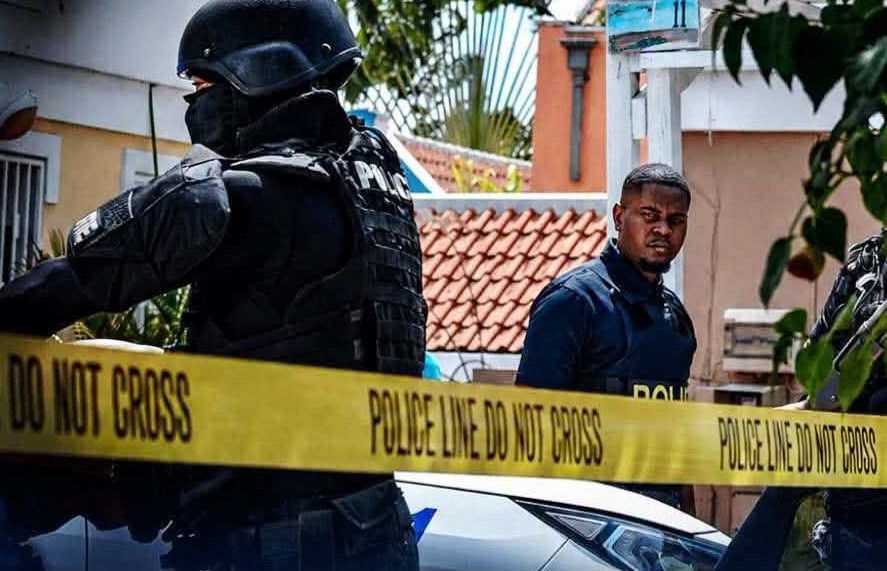
For residents who feel unsafe in their neighborhoods, such measures can provide reassurance.
However, the deployment also raises questions about the broader approach to crime prevention.
Authorities have not yet disclosed how many military personnel will be deployed, how long the operation will last, or which areas will receive priority.
More importantly, the success of the operation should not be measured solely by the number of patrols conducted.
The government should eventually be able to explain whether the additional deployment contributed to fewer incidents, improved response times, or other measurable security outcomes.
Military support may help the police manage immediate operational demands, but it cannot replace criminal investigations, effective prosecution, youth prevention programs, or sustained cooperation with communities.
The announcement concerns an anticipated increase in criminal activity. It should not automatically be interpreted as evidence that crime has already increased during the past week.
A credible security policy requires both preventive action and transparent reporting about results.
Political Accountability: The Governor's Refusal Sends a Message
Another significant development was Governor Mauritsz de Kort's refusal to sign a government decision that would have provided ministers and members of the Curaçao Parliament with a thirteenth-month payment.

Governor Mauritzs de Kort
The refusal means that the proposed arrangement cannot proceed through the administrative route presented.
If the government wishes to pursue the payment, it would have to submit legislation for parliamentary consideration.
This is not merely a discussion about additional compensation for political officeholders.
It concerns the legal framework within which public money is allocated and the responsibility of political institutions to respect constitutional and administrative procedures.
The governor's refusal should not be interpreted as a judicial finding against the officials involved. Nevertheless, it highlights the importance of establishing a proper legal basis for decisions involving public expenditure.
The timing also matters.
While healthcare professionals are demanding higher compensation, families are struggling with living expenses, and essential services face financial and operational challenges, any proposal to increase benefits for political officeholders is likely to attract scrutiny.
The government will need to explain the legal basis, financial implications, and justification for such an arrangement if it decides to pursue the matter through Parliament.
Public confidence depends not only on what government officials decide but also on how those decisions are made.
Tourism: Economic Growth Must Reach Beyond the Hotels
Tourism continues to play a central role in Curaçao's economy, but recent developments underline the importance of examining the quality of that growth.
A Deloitte study commissioned by the Curaçao Hospitality and Tourism Association examined employment conditions at 17 tourism businesses employing more than 4,000 workers.
The findings indicate that average gross wages increased slightly between 2022 and 2024 and that 65 percent of employees at the participating businesses held permanent full-time positions.
These figures offer useful insight, but they do not provide a complete picture of employment conditions across the entire tourism sector.
Smaller businesses, subcontractors, and informal workers may experience different conditions.
The available summary also does not establish whether wage increases kept pace with the rising cost of living.
That distinction is essential.
A worker can receive a higher salary and still experience declining purchasing power if housing, food, transportation, and utility costs increase more quickly.
Meanwhile, the Curaçao Tourist Board has highlighted the international exposure generated by the national football team's historic World Cup participation.
The Blue Wave has brought extraordinary attention to Curaçao, creating potential opportunities for tourism, investment, and international recognition.
However, publicity should not automatically be confused with economic returns.
The real question is how Curaçao converts that attention into additional business activity, employment, investment, and opportunities for local entrepreneurs.
Tourism statistics should therefore be evaluated alongside wages, purchasing power, housing affordability, and the participation of local businesses.
A successful tourism industry should contribute to a stronger society, not merely higher visitor numbers.
Food Security: Curaçao Must Reduce Its Vulnerability
The 79th conference of the Gulf and Caribbean Fisheries Institute, held in Curaçao from November 2 through 6, brought together more than 300 researchers, fishermen, and policymakers to discuss marine resources, fisheries, and food security.
For Curaçao, these discussions are particularly relevant because the island depends heavily on imported food.

Curaçao's agriculture
International price increases, transportation disruptions, and supply chain problems can quickly affect local consumers.
Developing local food production could help reduce some of that vulnerability.
However, expanding agriculture and aquaculture is not straightforward.
Limited land, water availability, electricity costs, and the need for investment present significant obstacles.
The Council of Ministers also discussed progress on the Caribbean Sustainable Aquaculture initiative, which focuses on establishing the conditions and regulatory framework for fish farming and other aquatic production.
At this stage, however, no specific fish farm has been approved, and no confirmed locations, investors, or implementation schedule have been announced.
The challenge now is to move beyond conferences and policy discussions.
Curaçao needs realistic projects supported by financing, infrastructure, appropriate regulations, and access to markets.
Food security cannot be achieved through declarations alone.
Artificial Intelligence and Papiamentu: Protecting Local Identity in a Digital Economy
The development of a national artificial intelligence strategy has also brought attention to the future of Papiamentu in digital technology.
The LengaGPT initiative is working to develop a language model capable of understanding and using Papiamentu.
Its developers estimate that approximately €400,000 will be required over four years to advance the project. That figure represents a funding estimate rather than a confirmed government contribution.
The initiative raises an important issue for Curaçao's technological development.
As artificial intelligence becomes increasingly integrated into education, public administration, healthcare, and business, smaller languages risk being underserved by systems primarily developed for larger international markets.
If Papiamentu is not adequately represented in these technologies, residents could face barriers when accessing digital services in their own language.
Supporting language technology could therefore contribute to both cultural preservation and digital inclusion.
Nevertheless, development must also address data protection, intellectual property, accuracy, and accountability.
Systems that generate incorrect information in medical, legal, or government settings could create serious consequences.
Curaçao should therefore approach artificial intelligence not only as an opportunity for innovation but also as an area requiring careful governance.
Population Growth: More Residents Mean Changing Demands
New figures from the Central Bureau of Statistics provide another important perspective on Curaçao's future.
The island had 159,824 residents on June 30, 2026, compared with 158,006 at the beginning of the year.
That represents an increase of 1,818 people, or approximately 1.2 percent.
Migration accounted for most of the growth, with preliminary figures showing 3,229 arrivals and 1,166 departures during the first six months.
During the same period, 560 births and 805 deaths were recorded.
These developments must also be considered alongside Curaçao's aging population.
At the beginning of the year, nearly 26 percent of residents were aged 65 or older.
An aging population creates growing demands for healthcare, accessible housing, transportation, and retirement-related services.
Population growth does not automatically mean that the labor force will expand at the same rate or that government revenue per resident will increase.
The composition of the population matters just as much as its size.
Government planning must therefore take account of migration patterns, age distribution, household needs, and labor market requirements.
Without that information, investments in housing, education, transportation, and healthcare risk failing to match the needs of the population.
The Central Challenge Is Implementation
Taken together, the developments of the past week reveal a common theme.
Curaçao is confronting immediate problems while simultaneously attempting to prepare for a future that will require major economic, technological, and social adjustments.
The healthcare dispute concerns the sustainability of essential services. Electricity shortages expose weaknesses in critical infrastructure. Security measures highlight the need for effective public protection. Tourism growth raises questions about the distribution of economic benefits. Population changes create additional pressure on public services.
None of these challenges can be resolved through a single announcement.
What is needed is a clearer connection between government commitments, implementation schedules, available funding, and measurable outcomes.
When investments are announced, citizens should know when projects will begin, when they are expected to be completed, and how success will be evaluated.
When policies are introduced, the responsible institutions should explain how they will be implemented and what resources are available.
And when essential services experience disruptions, temporary solutions should be followed by structural measures designed to prevent the same problems from recurring.
The coming weeks will provide several opportunities to assess whether the announcements and interventions of early November lead to concrete progress.
Healthcare negotiations remain unresolved. The electricity system still requires dependable generation capacity. The additional security deployment has yet to demonstrate its effectiveness. Long-term initiatives in energy, food production, and technology remain at different stages of development.
For Curaçao, the challenge is not choosing between solving today's problems and preparing for tomorrow.
Both must happen simultaneously.
Ultimately, the credibility of government policy will be determined less by the number of plans presented and more by whether residents experience reliable healthcare, stable electricity, safer communities, affordable living conditions, and genuine economic opportunities.
That is where Curaçao's progress must be measured: not simply in announcements and ambitions, but in improvements that reach the daily lives of its people.