Curaçao's government has made considerable progress in increasing tax revenues in recent years. However, while authorities continue examining how much tax revenue the country may be losing through noncompliance, another equally important question remains largely unanswered: How much financial damage are citizens and businesses suffering because of incorrect tax assessments, delayed objections and aggressive collection measures?
The issue goes beyond the efficiency of the Tax Department. It raises fundamental questions about government accountability, taxpayer protection and the economic consequences of a tax system that increasingly emphasizes revenue collection without providing equally transparent information about the accuracy of its assessments.
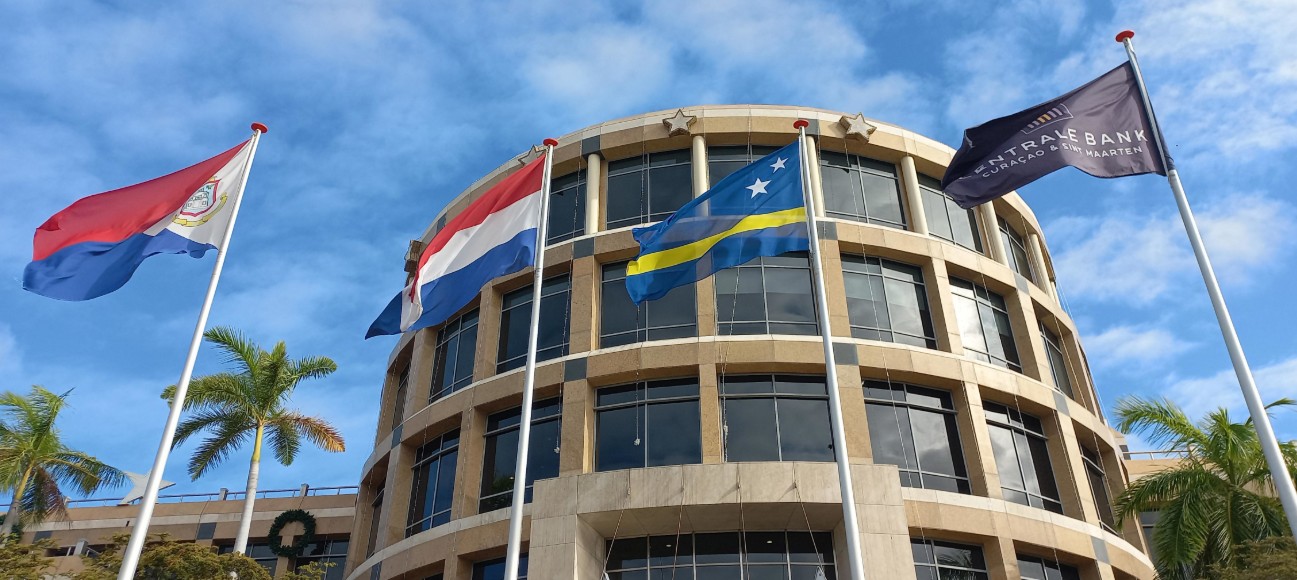
Central Bank of Curaçao and Sint Maarten
A recent publication by the Central Bank of Curaçao and Sint Maarten (CBCS) provides an opportunity to examine both sides of the issue.
The Central Bank's September 2026 Economic Bulletin, made available on October 1, includes an analysis of tax revenue developments and the so-called tax gap: the difference between taxes legally owed and the amounts actually collected.
The research is important because Curaçao depends heavily on taxation to finance public services. According to the CBCS, tax revenues accounted for 90.9 percent of government income in 2025.
However, effective taxation requires more than collecting as much money as possible. It also requires ensuring that the amounts demanded from taxpayers are legally justified and that mistakes can be corrected before they cause irreversible financial consequences.
Higher Tax Revenues Do Not Tell the Entire Story
The Central Bank reports that Curaçao's sales tax revenues increased from 7.6 percent of gross domestic product (GDP) in 2016 to 10.4 percent in 2025.
Much of this increase occurred during the government's Tax Revenue Enhancement Project, introduced in 2021 to improve compliance and strengthen collection procedures.

Tax Department
The project involved intensified tax audits, stronger enforcement, improved debt collection, increased monitoring of taxpayers and greater use of digital systems.
These measures coincided with a substantial improvement in government revenue.
But the Central Bank acknowledges an important limitation: higher collections do not necessarily prove that taxpayers have become more compliant.
Economic growth, inflation, changes in consumption and the recovery following the COVID-19 pandemic also influence the amount of tax revenue collected.
In other words, the government cannot automatically attribute every additional guilder collected to better enforcement.
More importantly, the CBCS concludes that Curaçao currently lacks sufficiently detailed statistical information to reliably calculate its sales tax compliance gap.
This means that although the government knows how much money it is collecting, it cannot yet reliably determine how much additional sales tax should have been collected under existing legislation.
That finding raises questions about how accurately the effectiveness of enforcement policies can be measured.
The Other Side of Tax Collection
Most public discussions about taxation focus on unpaid taxes, tax evasion and outstanding government claims.
These are legitimate concerns. Governments need adequate revenue to finance healthcare, education, infrastructure and public safety.
But tax administration also has another responsibility: protecting taxpayers against incorrect assessments and disproportionate enforcement.
In Curaçao, the Tax Department can issue estimated assessments when taxpayers fail to provide sufficient information or meet their filing obligations.
Such assessments may be legally justified.
However, problems arise when estimates do not accurately reflect a taxpayer's financial situation or when disputed assessments are subjected to collection measures before the underlying disagreement has been resolved.
For a large company with accountants, tax advisers and legal representation, challenging an assessment may be manageable.
For a small entrepreneur or an individual with limited financial resources, the situation can be very different.
A disputed assessment can lead to payment demands, enforcement orders, asset seizures and potentially the forced sale of property.
Even when an assessment is eventually reduced or overturned, the financial consequences may already have occurred.
A business might have exhausted its working capital, dismissed employees or suspended operations.
In extreme circumstances, an entrepreneur could lose a business before the authorities determine that the original tax claim was incorrect.
The central question is whether Curaçao has sufficient safeguards to prevent such outcomes and whether the government systematically measures their occurrence.
A Legal Right to Object Is Not Enough
Curaçao's General National Ordinance on Taxes provides taxpayers with the right to challenge assessments.
However, legal protection is meaningful only when objections are handled within a reasonable period and taxpayers can obtain effective remedies.
A judgment issued by the Court of First Instance of Curaçao on February 26, 2026, illustrates the importance of timely administrative decisions.
In that case, a taxpayer had filed an objection in December 2023 against a decision concerning income tax for 2019.
By the time the matter reached the court, the Tax Inspector had still not issued a decision on the objection.
The court declared the appeal against the failure to decide in time well-founded and ordered the inspector to issue a decision by May 24, 2026.
The judgment does not establish that the underlying tax position was incorrect. It does, however, demonstrate that taxpayers can face prolonged delays in obtaining decisions on their objections.
This raises broader questions that deserve public answers.
How many tax objections are submitted annually in Curaçao? How many are resolved within the statutory deadlines? How many assessments are reduced or annulled after taxpayers challenge them?
Equally important, how much money is collected through enforcement measures while the underlying tax liability remains disputed?
Without reliable answers, neither Parliament nor the public can adequately assess whether the tax administration is operating fairly and efficiently.
The Economic Damage May Extend Beyond Individual Taxpayers
The potential consequences of incorrect taxation are not limited to the amounts involved in individual assessments.
They can affect the broader economy.
When a business must use its available cash to satisfy a disputed tax claim, that money is no longer available for wages, inventory, investment or expansion.
If the assessment is subsequently reduced, a refund may restore some of the financial loss.
But it cannot necessarily restore lost customers, cancelled contracts or employment opportunities.
The CBCS itself acknowledges that excessive tax payments and delayed refunds can reduce liquidity available to households and businesses.
The Central Bank also warns that such practices can undermine confidence in the fairness and effectiveness of the tax system.
Its analysis explains that tax collections exceeding estimated liabilities do not necessarily indicate better compliance. They may instead reflect delayed refunds, excessive withholding, payments relating to earlier periods or accounting differences.
This is particularly relevant to Curaçao, where small and medium-sized businesses operate in a relatively limited domestic market.
Cash-flow difficulties can quickly become serious operational problems.
If incorrect assessments or delayed refunds contribute to business closures, reduced investment or job losses, the government may ultimately undermine the economic activity that generates future tax revenues.
The extent of such damage remains unknown.
That is precisely why independent research would be valuable.
The Missing Information
The Central Bank's research highlights weaknesses in the availability of detailed tax and economic data.
However, improving the measurement of the tax gap should be only one part of a broader effort to make the tax system more transparent.
The government should also provide comprehensive information about the administrative and legal consequences of its collection practices.
This would include the number and value of assessments subsequently reduced or cancelled, the average time required to process objections, outstanding refund obligations and the frequency of enforcement measures involving disputed liabilities.
It would also be useful to establish how often taxpayers successfully challenge collection actions and whether compensation is awarded when government mistakes cause demonstrable financial losses.
These figures would not automatically establish widespread wrongdoing.
They would, however, allow policymakers to distinguish between effective enforcement and administrative practices that impose unnecessary costs on taxpayers.
They would also help identify whether particular groups, including small businesses and lower-income households, face disproportionate difficulties in challenging tax decisions.
Importantly, the absence of such information should not be interpreted as proof that incorrect assessments are widespread. It means their frequency and economic consequences cannot currently be assessed with sufficient confidence.
A Question of Government Accountability
The CBCS is not responsible for determining whether individual tax assessments are correct.
That responsibility belongs to the tax authorities and, when disputes arise, the courts.
Nevertheless, the Central Bank could contribute to understanding the wider economic effects of administrative errors, excessive payments and delayed refunds.
Such research would require cooperation from the Tax Inspector, the Tax Collector and other relevant government institutions.
It would also require reliable administrative information and a willingness to examine the consequences of tax policy from the perspective of taxpayers rather than government revenue alone.
Curaçao Parliament has an important role in demanding this information.
Parliamentary oversight should not be limited to determining whether the government has met its revenue targets.
It should also establish whether the methods used to achieve those targets respect legal safeguards and avoid unnecessary economic damage.
A government that reports record tax collections while failing to provide adequate information about objections, refunds and overturned assessments presents an incomplete picture of its fiscal performance.
Tax Collection and Taxpayer Protection Must Go Together
There is no contradiction between demanding stronger tax compliance and insisting on better protection for taxpayers.
Citizens and businesses have a legal obligation to pay the taxes they owe.
The government has an equally important obligation to ensure that the amounts it demands are correct, that objections receive timely consideration and that collection measures remain proportionate.
These responsibilities should reinforce one another.
A tax system perceived as fair and predictable can encourage voluntary compliance.
Conversely, uncertainty about assessments, prolonged disputes and delayed refunds can weaken public confidence in the authorities.
For Curaçao, the challenge is therefore not simply to increase revenue.
It is to build a tax administration capable of collecting what is legally owed while correcting mistakes promptly and protecting economic activity from unnecessary disruption.
The Central Bank has identified important limitations in measuring how much tax revenue the government may be missing.
The next question is whether Curaçao is prepared to apply the same level of scrutiny to the money it may be collecting incorrectly.
Because the true quality of a tax system cannot be measured solely by how much money enters the government's treasury.
It must also be measured by how accurately taxes are assessed, how fairly they are collected and how effectively citizens are protected when the government gets it wrong.
Ultimately, Curaçao needs answers to two questions, not one: How much tax revenue is the government failing to collect, and how much economic damage might it be causing when it demands money to which it is not legally entitled?