WILLEMSTAD – Amnesty International Netherlands has rejected claims by Curaçao Minister of Justice Shalten Hato that the human rights organization refused to meet with officials from his ministry, deepening a disagreement that emerged following Amnesty’s recent working visit to the island.
Dagmar Oudshoorn, director of Amnesty International Netherlands, iindicated that the organization has never refused discussions with Justice Ministry officials. On the contrary, she said such meetings take place annually when Amnesty representatives visit Curaçao.
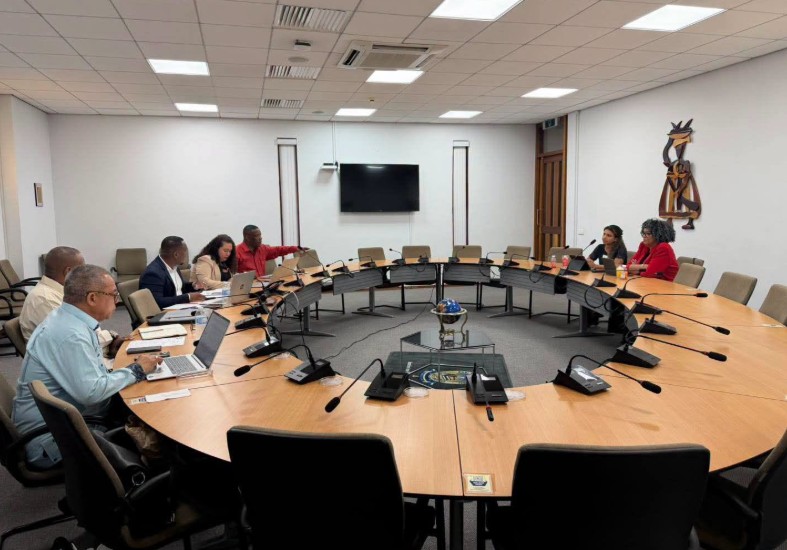
Amnesty International during a meeting with Members of Parliament
Hato said last week that he had repeatedly referred Oudshoorn to civil servants responsible for discussing human rights matters on behalf of his ministry, but claimed she was unwilling to meet with them.
Oudshoorn disputes that account.
“That is not true. We have never refused to speak with the officials. We have met with them,” she indicated.
According to Oudshoorn, Amnesty’s concern is not whether it can communicate with ministry officials, but whether Hato himself is prepared to engage with the organization. Amnesty believes that, as the minister politically responsible for justice and human rights policy, Hato should also be willing to meet organizations that critically scrutinize government policy.
The organization has additionally requested access to Curaçao’s immigration detention facilities. Oudshoorn said neither Hato nor his ministry has responded to that request.
The issue is particularly relevant to Amnesty’s concerns regarding the treatment of undocumented migrants and the protection of refugees and asylum seekers, subjects that were discussed during the organization’s recent working visit to Curaçao.
Oudshoorn stressed that Amnesty is not seeking a confrontation with the minister. She argued, however, that a democratic state governed by the rule of law requires government officials to be prepared to account for their policies and engage with civil society organizations that serve as a critical counterweight to government.
She also rejected Hato’s criticism of Amnesty’s methods and his suggestion that the organization does not adequately apply the principle of hearing both sides before reaching conclusions. According to Oudshoorn, Amnesty follows strict procedures to ensure its investigations and reporting meet established standards.
Hato, meanwhile, has indicated that he does not intend to continue the public exchange.
“With all due respect, I have already responded to Amnesty’s statements and will not continue the back-and-forth discussion,” the minister indicated.
Hato emphasized that Curaçao’s security is his responsibility and remains his priority.
The disagreement leaves several substantive issues unresolved, including Amnesty’s request to visit immigration detention facilities and whether Hato will personally meet with the organization during future visits.
The dispute comes amid continuing debate over how Curaçao balances immigration enforcement and public security with its obligations regarding human rights and the treatment of undocumented migrants and people seeking international protection.