WILLEMSTAD – Visitors from the United States continue to play an increasingly important role in Curaçao's tourism economy, not only because of their growing numbers but also because of their significantly higher daily spending. According to figures released by the Curaçao Tourist Board (CTB), American visitors spend an average of US$407 per person per day, almost twice the US$206 spent by visitors from the Netherlands.
The figures, based on CTB's 2025 Exit Survey and included in the October 2026 tourism report, illustrate the different economic contributions of Curaçao's three largest source markets.
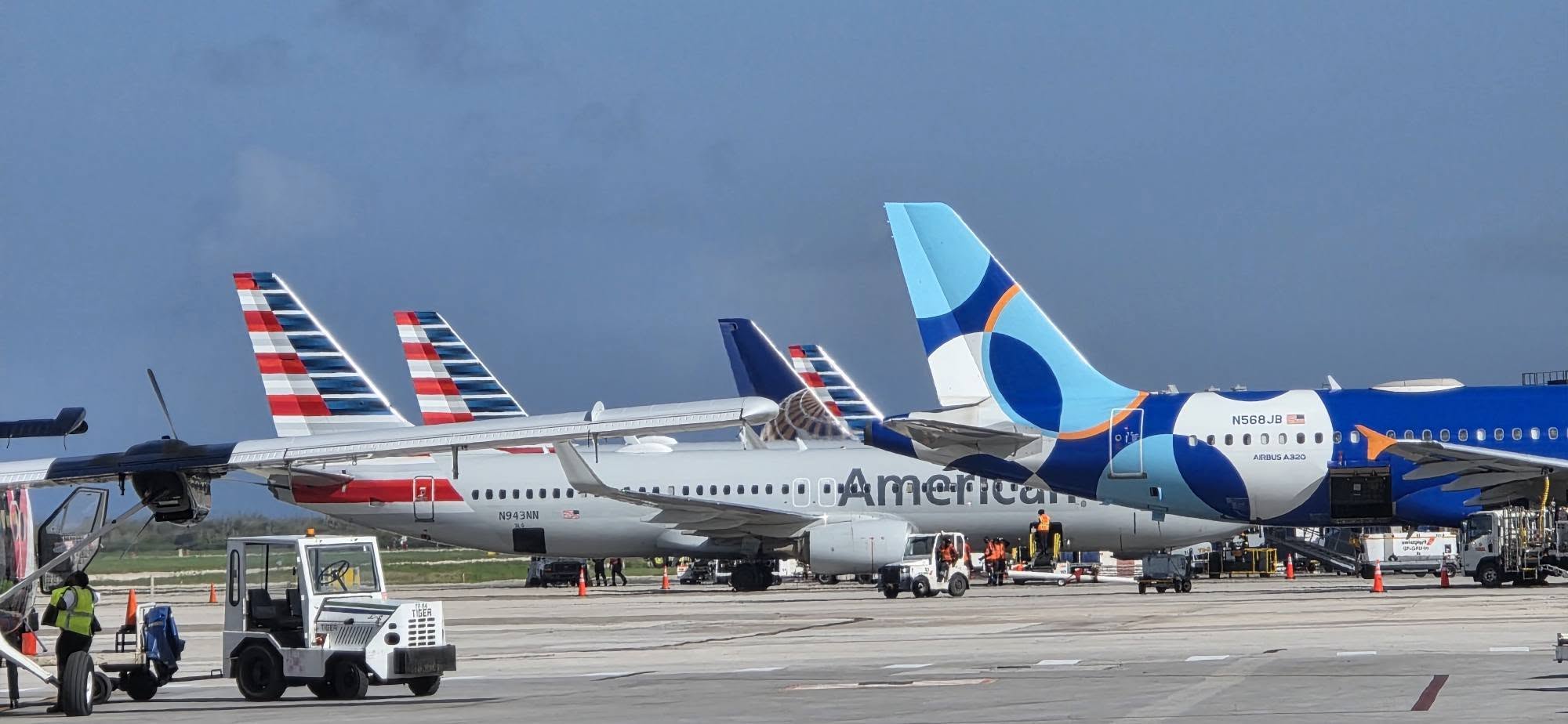
Curaçao Airport
Although the Netherlands remains the island's largest source of tourists, the United States is an important market in terms of daily visitor expenditure.
In October 2026, Curaçao welcomed 17,169 visitors from the United States, an increase of 12 percent compared to October 2025.
American visitors accounted for approximately one-quarter of all stayover arrivals during the month, making the United States Curaçao's second-largest tourism market.
The average American visitor stayed 5.9 nights, considerably shorter than the 10.9-night average recorded among Dutch tourists.
However, American visitors spend substantially more per day.
Based on the average daily expenditure of US$407 and the average stay of 5.9 nights, spending by an American visitor would amount to approximately US$2,401 over a typical visit.
Dutch visitors, who spend an average of US$206 daily and stay 10.9 nights, would spend approximately US$2,245 during an average visit.
These calculations are illustrative and combine average spending figures from the 2025 Exit Survey with average lengths of stay recorded in October 2026. They should not be interpreted as actual spending totals for the month.
The figures nevertheless demonstrate how shorter visits can generate considerable tourism expenditure when daily spending is relatively high.
Accommodation preferences also differ significantly between the two markets.
Among American visitors, 67 percent chose resort hotels, while 33 percent selected alternative accommodations.
Dutch visitors demonstrated the opposite preference, with 56 percent choosing alternative accommodations and 44 percent staying in resort hotels.
These differences are important for Curaçao's hospitality industry because they influence demand for hotels, vacation rentals, restaurants, transportation, and other tourism-related services.
The Netherlands remained the island's largest source market in October, with 21,877 stayover arrivals, representing 32 percent of all visitors.
Dutch arrivals were approximately 1 percent lower than in October 2025, indicating that the market remained relatively stable.
The largest age group among Dutch visitors was 25 to 44 years old, accounting for 33 percent of arrivals.
For American visitors, the same age category represented 43 percent of arrivals.
Colombia, Curaçao's third-largest source market, also demonstrated strong economic potential.
During October, the island welcomed 5,553 Colombian visitors, an increase of 23 percent compared to the same month last year.
Colombian visitors spent an average of 5.8 nights on the island, compared to 5.1 nights in October 2025.
Their average daily expenditure was US$275 per person, according to the 2025 Exit Survey.
Based on the October 2026 average length of stay, this would represent approximately US$1,595 per Colombian visitor during a typical trip.
Colombian tourists also showed a preference for resort hotels, with 65 percent choosing this accommodation category and 35 percent selecting alternative lodging.
The largest age group among Colombian visitors was 25 to 44 years old, accounting for 44 percent of arrivals.
The differences between Curaçao's major tourism markets demonstrate why visitor spending, length of stay, and accommodation preferences are important indicators alongside arrival numbers.
A market generating large numbers of visitors does not necessarily produce the highest daily spending, while tourists staying for shorter periods may contribute substantially to hotels, restaurants, and recreational businesses.
For Curaçao, the challenge is to ensure that continued tourism growth translates into meaningful economic benefits for local businesses, employees, and the wider community.
The latest CTB figures highlight the importance of understanding not only how many tourists visit the island but also how they spend their money and which sectors benefit from their presence.