WILLEMSTAD - The Social and Economic Council (SER) of Curaçao issued today its advice on an initiative proposal submitted by the MAN-PIN faction in Parliament to amend the Public Order Ordinance. The proposal seeks to restrict the distribution and offering of single-use plastic products, particularly at public events and in sales or distribution on or along public roads.
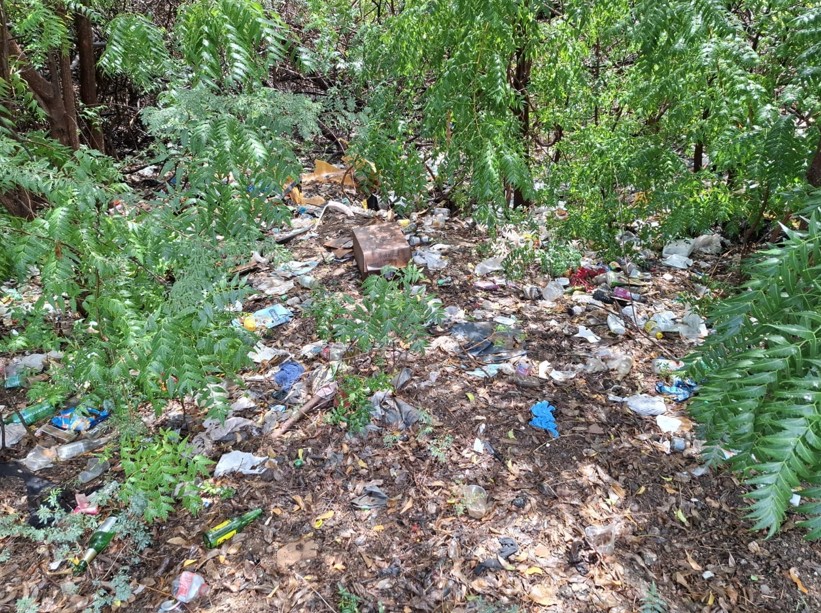
The initiative aims to reduce pollution and litter in public spaces by limiting the use of disposable food and beverage items and by assigning clearer responsibility for proper waste collection to permit holders, organizers and distributors. The issue is visible in Curaçao’s streets, coastal areas and public venues, but it also reflects a wider global debate over plastic waste, public health, circular economy practices and the capacity of governments to translate environmental goals into enforceable rules.
The proposal is a revised version of an earlier initiative submitted to the SER in February 2020. The Council issued advice on that earlier proposal in July of the same year. In its latest review, the SER did not treat the proposal solely as an environmental measure. It examined it as a broader socioeconomic and institutional question: not only whether reducing single-use plastics is desirable, but under what conditions such a measure can work in practice.
The SER assessed the proposal from several perspectives. It considered the extent to which the measure could help reduce plastic-related litter, the legal clarity of the proposed restrictions, the administrative burden for licensing and enforcement authorities, the practical feasibility of monitoring compliance in public spaces, and the potential consequences for businesses and consumers. The Council also examined the availability and affordability of alternatives, the position of small businesses, the importance of public communication and the need for workable transition periods.
The review underscores that plastic pollution cannot be addressed effectively through a single prohibition or regulatory clause alone. A restriction on disposable plastic products is more likely to be effective when it forms part of a broader strategy that includes waste prevention, reuse, behavioral change, practical enforcement and periodic evaluation. In a small island economy with a significant tourism profile, environmental quality, public health, urban cleanliness and economic attractiveness are closely connected.
The SER’s analysis therefore focused on the conditions required to make the initiative implementable, enforceable and socially workable. These include clear legal definitions, unambiguous responsibilities for permit holders and distributors, realistic enforcement capacity, timely information for businesses and consumers, and sufficient adjustment time for sectors that deal directly with the public.
In that sense, the SER of Curaçao placed the initiative within a wider policy framework. Reducing plastic waste is not only a matter of banning certain products. It is also a matter of governance: who collects waste, who monitors compliance, what alternatives exist, how businesses are prepared and how results are measured. Those questions will determine whether the proposal can contribute in practice to a cleaner, healthier and more economically resilient public environment.