WILLEMSTAD – Curaçao and Suriname have exchanged ideas on how housing programs can contribute to long-term social and economic development, as Suriname prepares for future revenues from its emerging oil and gas sector.
Fundashon Kas Popular (FKP) received Suriname Vice President Dr. Gregory Rusland and an official delegation on Friday, October 9, for a presentation on Mi Kas Awor, Curaçao's new government-subsidized homeownership program.
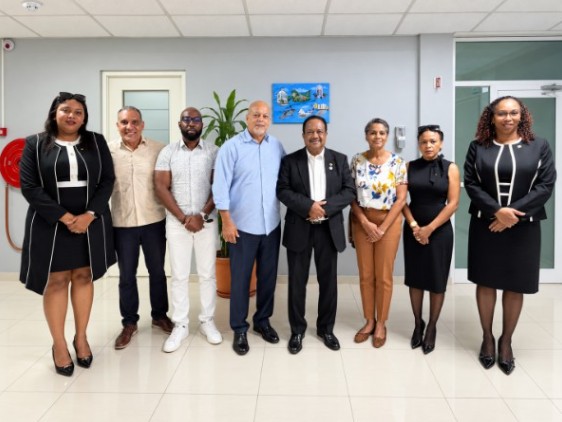
The visit focused on the potential for housing investment to generate broader economic benefits while helping families acquire their own homes.
During the meeting, FKP presented the structure and objectives of Mi Kas Awor and explained how the program seeks to combine public support with other sources of financing.
According to FKP, the program is designed to create a multiplier effect in the Curaçao economy by mobilizing bank financing, household savings and capital from contractors. Housing construction can also generate employment and additional economic activity for local suppliers and other businesses connected to the construction sector.
At the same time, the primary social objective is to make homeownership accessible to more families.
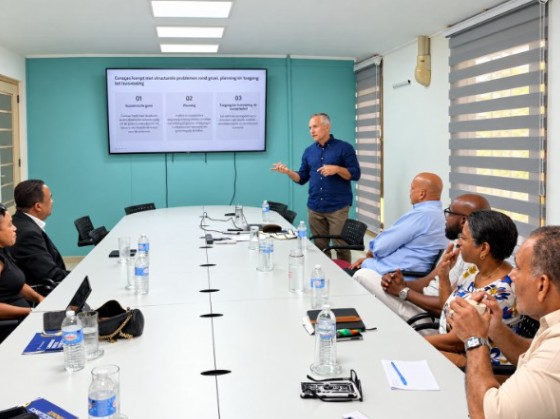
The discussion was particularly relevant for Suriname as the country considers how future revenues from its oil and gas sector could be used to support sustainable social and economic development once those revenues begin flowing into the national budget.
Rather than viewing such revenues solely as government income, the discussions highlighted the possibility of directing part of new financial resources toward programs capable of creating longer-term assets and economic activity.
Housing is one area where such investment could potentially have effects beyond the construction of homes. Spending on residential development can create jobs, stimulate demand for local goods and services, encourage private investment and expand access to financing, while leaving families with a tangible long-term asset.
For Curaçao, FKP presented Mi Kas Awor as an example of how targeted public support could be used alongside private and household resources instead of relying entirely on direct government financing.
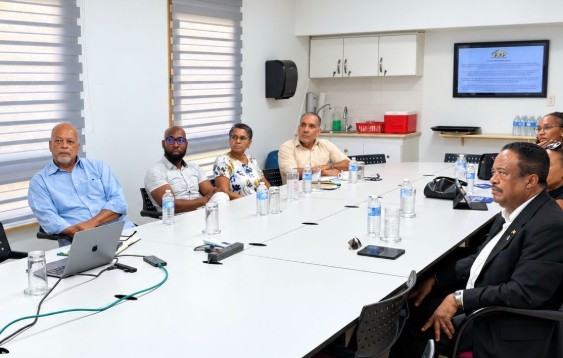
The meeting came on the same day that FKP received a delegation from the Board of Financial Supervision (Cft), during which the housing foundation gave a detailed presentation on Mi Kas Awor, its financial administration and its long-term housing development plans.
FKP recently indicated that its broader land portfolio, including land that would still need to be formally made available by the Curaçao government, could potentially provide capacity for up to 13,809 homes over a 15-year period. The foundation has stressed that such figures represent projections rather than guaranteed construction numbers.
The meeting with the Surinamese delegation had a different emphasis, focusing primarily on knowledge exchange and the potential relationship between housing policy, investment and sustainable economic development.
According to FKP, the exchange between Curaçao and Suriname could help both countries explore ways of converting new financial resources into lasting assets, employment and opportunities for future generations.
For Suriname, the issue is expected to become increasingly important as anticipated oil and gas revenues create new possibilities—and policy choices—over how those resources will eventually be used.
The visit also underscored the potential for greater exchange of experience between the two Caribbean countries as they examine development models intended to combine social objectives with longer-term economic benefits.